In this article
Recruitment is one of the hardest markets to stand out in, because almost everyone says the same three things. People. Partnership. Results.
Open ten agency websites and you'll read near-identical promises, which means none of them is a reason to choose. The employer comparing three agencies can't tell them apart. Neither can the candidate deciding whose job alerts to sign up for.
When everyone claims the same ground, claiming it louder doesn't help. You have to claim different ground.
Why recruitment brands end up sounding alike
Nobody sets out to sound like everyone else. The words are true, so they feel safe. Everyone sells much the same service, so everyone borrows the market's vocabulary. And a new website is usually briefed by looking at what competitors already say.
But a line that is true of everyone tells the reader nothing about you. Here is how some familiar ones tend to land.
| What the page says | What the reader hears | What would help instead |
|---|---|---|
| People first | Who would say people last? | Show one thing you do for people that others don't |
| A true partnership | A hope, not a service | Describe what working together looks like in the first month |
| Results driven | No result is named | Name the roles you fill, where, and for whom |
| Specialists across all sectors | A contradiction | Name the sectors you genuinely know |
| Access to the best talent | Everyone fishes in the same pool | Say how you reach people others miss |
None of the left-hand lines is wrong. They just give an employer or a candidate nothing to hold on to.
Claim different ground, not louder ground
The way out isn't a better adjective. It's finding the thing that is actually true and specific about you, and building the brand around that instead of the category's shared vocabulary.
Sometimes it's a sector you genuinely own. Not a list of twelve, but the one or two where you know the roles, the employers, the shift patterns and the tickets candidates need, and can show it.
Sometimes it's a way of working. How you find people, take a brief or stay in touch after a placement. It only counts if a client or candidate would notice.
Sometimes, usefully, it's a decision about who you're really for. That one is the least obvious, and often the most powerful.
Deciding who the experience serves
Every recruiter markets to two audiences at once. Employers pay the fees and are courted like any business buyer. Candidates make the whole thing work, and they behave like consumers: busy, on a phone, comparing you with every job site they already use. Much recruitment marketing is written for the employers.
When we rebuilt Staffline's website, the sharp move was to put the candidate first rather than the client. At the time Staffline was the largest provider of blue-collar recruitment in the UK, and it was finding it increasingly hard to source candidates to meet the peaks and troughs of demand. Its website wasn't pulling its weight.
Our first analysis found why. Gaps in how the software fitted together left the job adverts barely optimised online, and the job search was cumbersome. So candidates struggled to find Staffline's jobs through search engines, then struggled to apply even when they did. The site and its technology needed a complete overhaul, on foundations that could compete with the UK's largest recruitment sites: Indeed, Reed and Total Jobs.
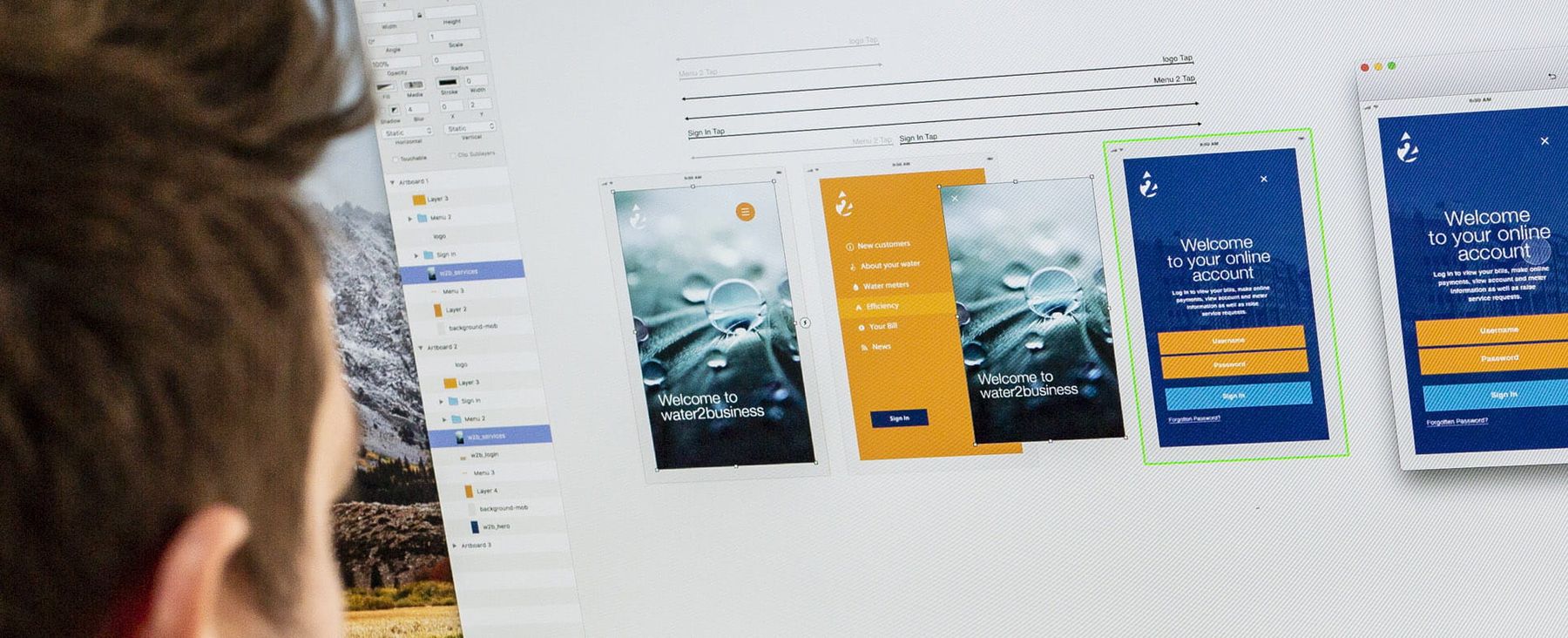
A six week audit of the brand, focused on data and competitor analysis, came next, then workshops with clients and with candidates. From there the website redesign went job search heavy and mobile first. We streamlined registration and the application process, so applying became far quicker. Clear new icons let people browse jobs by sector or industry. An integration with Broadbean let the group post job adverts out to multiple websites. And an SEO strategy targeted competitors with a similar proposition and a similar digital presence.

Designing around the candidate wasn't a slogan. It reshaped the job search, the experience and the technology underneath. The differentiator was a genuine decision about who the experience served.
Through well thought out ideation they gave us a solid website that reflected our positioning as the largest provider of blue-collar workers in the UK, and immediately increased both traffic and job applications.
Making "people" mean something
"People" is one of the three lookalike words. It can still be your ground, if you prove it in a way nobody else bothers to.
Pure Resourcing Solutions, an East Anglian recruitment consultancy, had a strong brand and a great local reputation for each of its offices, but no real digital presence. One of its genuine strengths was a focus on people and on transparent relationships: with clients, with candidates and with its own staff.
So the work showed it rather than said it. We ran a photography shoot of Pure's own staff and used the pictures throughout its online and offline material. We created consultant profiles, putting named people at the front of the brand. And the new website gave candidates a personalised portal, while sending relevant live CVs straight to consultants.
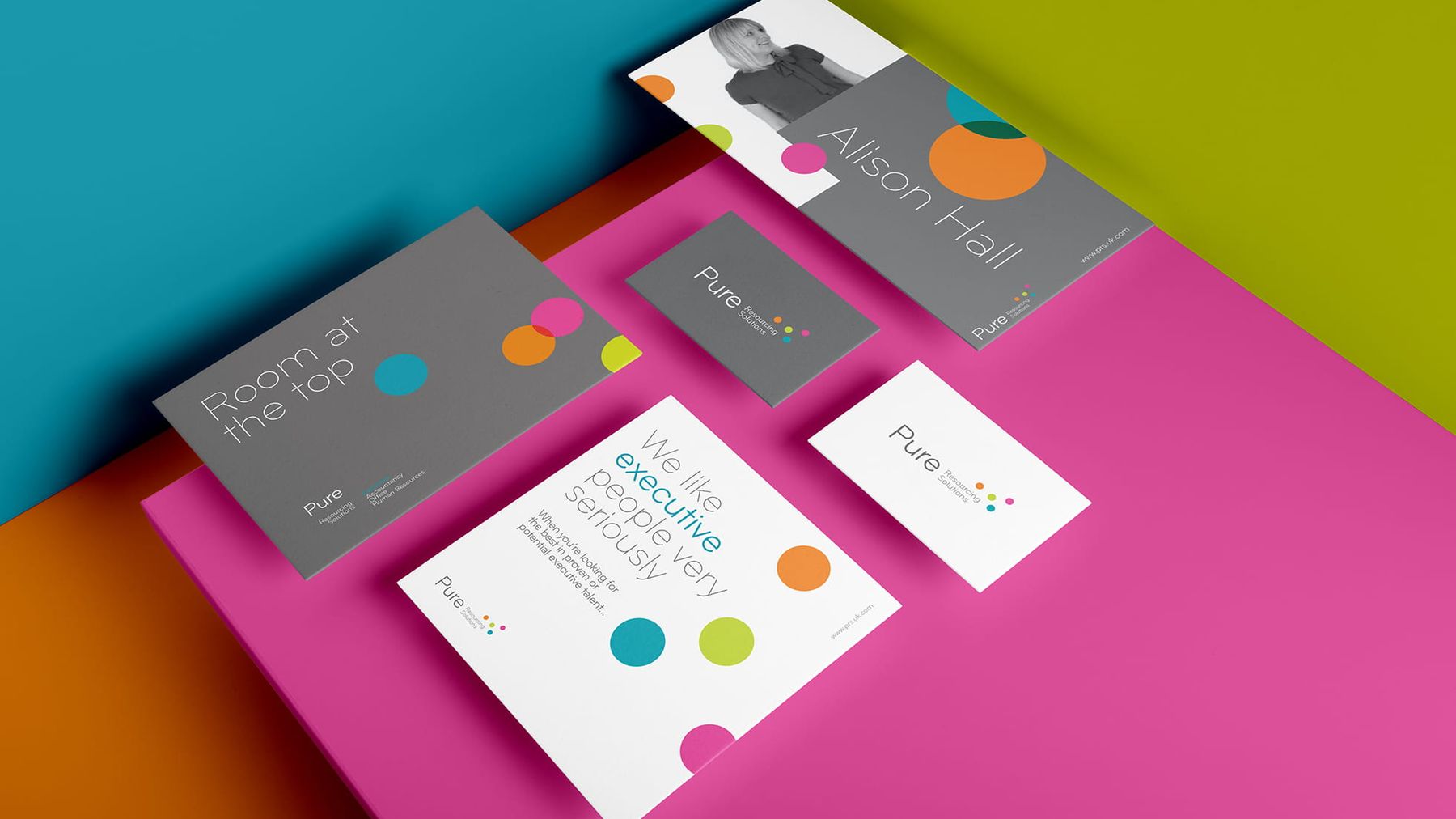
The word was the one the whole market uses. The difference was evidence: real faces, real names, and a website that put a candidate's CV in front of the right consultant.
How to find the thing that's true of you
You can't brainstorm your way to a truer claim. You find it by listening, which is the heart of human-centred design.
- 01Ask the people who chose you
Talk to recent clients and placed candidates. Ask why they picked you, and what nearly stopped them.
- 02Ask the people who didn't
The pitch you lost and the candidate who gave up halfway through an application know things your happy clients won't tell you.
- 03Lay the competition side by side
Put ten competitor homepages next to yours. Strike out every line of yours that could sit on any of theirs.
- 04List what is only true of you
A sector where your depth is real, a way of working people notice, or a choice about who comes first. Keep only what you can prove.
- 05Build everything around one of them
The brand, the website, the job search, the adverts and how your consultants talk about the business should all say the same thing.
Our article on what good discovery actually looks like goes further into the interviews.
Be willing not to be for everyone
A recruitment brand wins by being unmistakably itself, which means being willing to not be for everyone. An agency that says it recruits blue-collar logistics staff across the Midlands is more choosable than one that's vaguely excellent at everything. The first gives a specific employer and a specific candidate a specific reason.
When everyone says the same thing, the answer isn't a louder claim. It's a truer one.
Narrowing the message isn't the same as narrowing the business. You can still take work outside your focus. The brand simply leads with what's true. Positioning on a point of view looks at how to hold that line when it feels risky.
Nor is this only a recruitment problem. Charities that all make a difference, shops that all care about quality, public services that all put people first. Whether you need to reach a business buyer, a candidate, a donor or a resident, the fix is the same: find what is true of you and say it plainly.
In a lookalike market, a sharp point of view isn't a risk. It's the only real advantage on offer.
If you'd like help finding yours, our recruitment marketing work starts with that research and carries it through brand strategy, the website and the job search. We're happy to talk it through.
Common questions
What is recruitment marketing?
The phrase is used in two ways. It can mean how a recruitment business markets itself, to the employers who hire through it and the candidates it places. It can also mean how an employer markets its own vacancies to attract applicants, which overlaps with employer branding. Most of the advice here applies to both.
Should a recruiter market to clients or to candidates first?
It depends on where the business is stuck. If you can win clients but struggle to fill roles, the candidate experience is probably where the gains are, as it was for Staffline. If candidates come easily but clients don't, the client story needs the work. Either way, decide who comes first and design for them, rather than serving both half-heartedly.
Isn't our job search a technical matter rather than a brand one?
For a candidate, the job search often is the brand. If it is slow on a phone or hard to apply through, no strapline will make up for it. That is why Staffline's site and its technology were overhauled together.