In this article
In healthcare, almost nobody buys alone. A decision to choose a provider passes through clinical leads, procurement, finance, risk, sometimes legal, each protecting something different and each able to say no. Marketing that speaks to only one of them, usually the obvious clinical buyer, leaves the others unconvinced, and the others are where deals quietly die.
This piece is mostly about services bought by organisations, such as insurers, solicitors and employers, where the committee is most formal. The idea travels further. A patient choosing how to see their doctor, or a family choosing care, also decides with other people in the room, even when nobody calls it a committee.
Who is actually in the decision
Most providers can name their buyer. Fewer can name everyone else with a say, or what worries each of them. The roles vary, but most decisions have some version of these.
| Who | What they need to believe | What they are afraid of | Proof that helps |
|---|---|---|---|
| Clinical lead | Outcomes will be good for the people in their care | Being answerable for a poor outcome | Clinical governance, qualified people, how quality is checked |
| Procurement | The choice will survive scrutiny | A decision they can’t defend later | A clear scope, the documents they ask for, a fair comparison |
| Finance | The numbers work | Costs that grow after signing | What is included, what isn’t, and the cost of doing nothing |
| Risk or governance | Choosing you won’t rebound on them | An incident with their name on it | Policies, a track record, references they can call |
| Legal, sometimes | The terms are sound | A liability nobody spotted | Clear terms, early |
One message can’t carry all of that, and pretending it can is how good providers lose to clearer ones.
A healthcare marketing strategy starts with a map
So the first move in healthcare marketing isn’t a message. It’s a map. Who is actually in this decision, what does each of them need to believe, and what is each of them afraid of?
It needn’t be elaborate. A page per person is plenty.
- 01List the people
Everyone who can shape, slow or stop the decision, not only the person who signs.
- 02Write down what each needs to believe
In their words, as near as you can get them.
- 03Name each one’s fear
What goes wrong for them personally if they choose badly.
- 04Check your marketing against it
Which of those questions do your website, deck and brochures answer, and which do they ignore?
- 05Fill the biggest gap first
It usually belongs to the person most likely to say no.
The first draft of the map is a guess. The useful version comes from talking to the people on it.
The committee you imagine isn’t the one that exists
This is why we start with research. For HCML’s corporate health proposition, we interviewed the intermediaries who recommend and buy these services, to learn how they choose a provider. They told us relationships are everything, and that they rely on suppliers to deliver and to validate what they recommend to their own clients. They hunt for credible content to share onward, turning overwhelmingly to LinkedIn to find it, and they want to hear from a provider all year round rather than be bombarded.
That changes what the marketing is for. An intermediary’s reputation rides on the providers they recommend, so what they need from you is something credible to pass on. What we learned shaped a year of content built around them, from a LinkedIn calendar to segmented emails, landing pages and lived experience stories.
For Bush & Co, who provide case management and expert witness services for catastrophic injury, we spoke with the solicitors and insurers who decide. Three things came back. The case managers were the relationship. Solicitors searched by geography first. And they were cautious by nature, so trying someone new needed a push. The website was rebuilt around a consultant finder on a map, where a solicitor can filter by specialism, geography and experience, shortlist and download CVs.
They started with our customers rather than our logo, and the behavioural research they came back with told us things about how all our various customer groups choose a provider that we genuinely hadn’t seen before.
In both cases the real decision logic was more specific than the view from inside, and in places different. You can’t market to a committee you haven’t listened to. What good discovery actually looks like covers how to run those conversations yourself.
One story, with different proof for each reader
Giving each person what they need doesn’t mean five campaigns or five brands. It means one clear story, which is the job of brand strategy, with the proof arranged so each reader finds their own answer quickly.
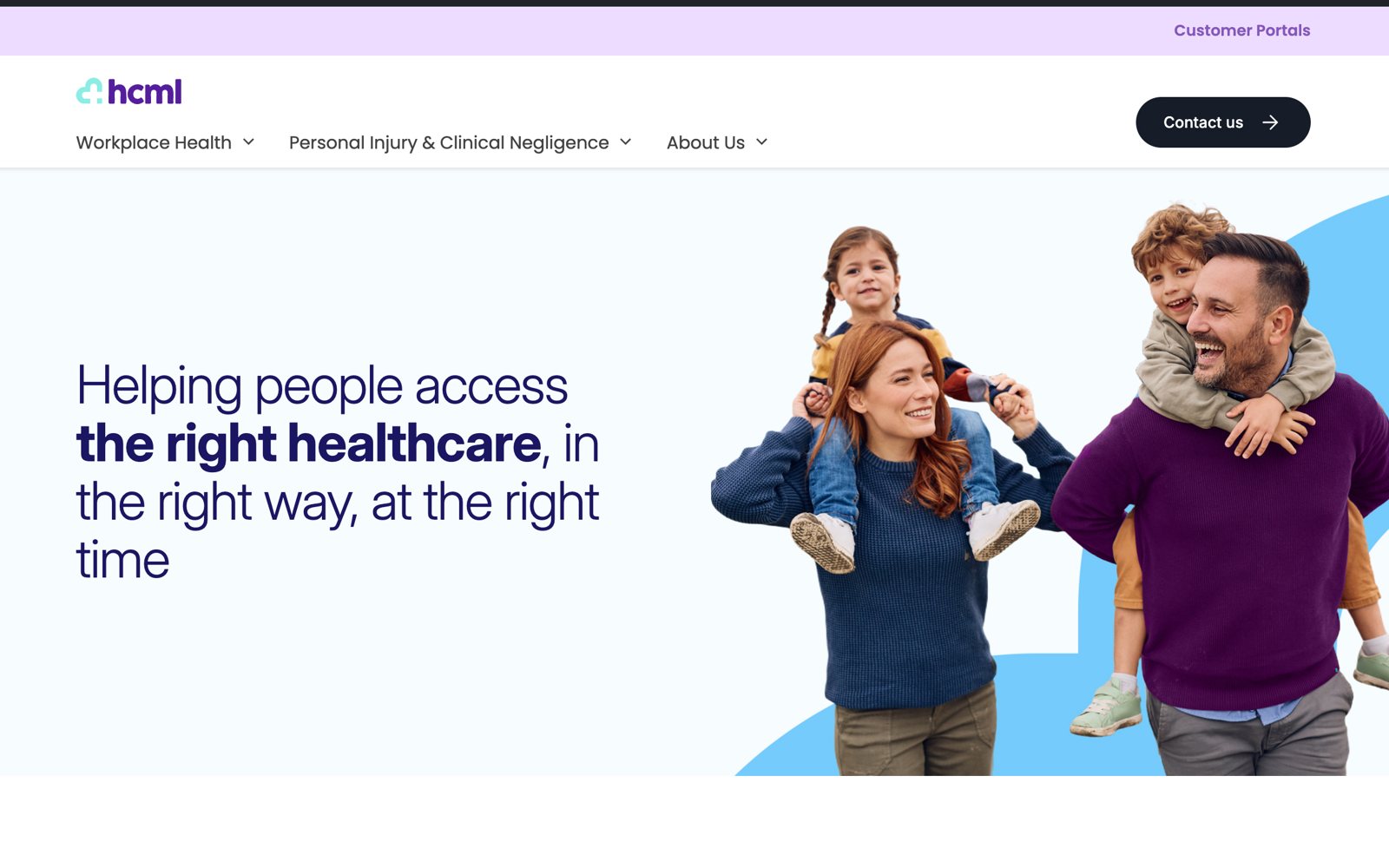
A website is often where this shows first. HCML has two connected sides: corporate health and wellbeing for employers, and rehabilitation and case management for insurers, solicitors and the public sector. The website we rebuilt repositioned HCML around both. On the rehabilitation side, where insurers and solicitors choose by location and specialism first, we built a case manager finder that lets them filter by location, profession, specialism and region.
Arm your champion
One member usually becomes your internal advocate. The most useful thing your marketing can do is arm that person to win the argument on your behalf: the clear one-liner, the proof procurement will accept, the answer to the objection finance will raise. You’re not just persuading the buyer. You’re equipping your champion to persuade the room when you’re not there.
Map the committee, then give each member the thing they need to say yes.
That is why sales material matters as much as the website. A deck or sales tool that carries the story means the case doesn’t rest on one person’s ability to explain the business in a room. For HCML, the brand came with streamlined sales decks, info packs and infographics, built to convey the company’s expertise and integrity while showing its more human side.
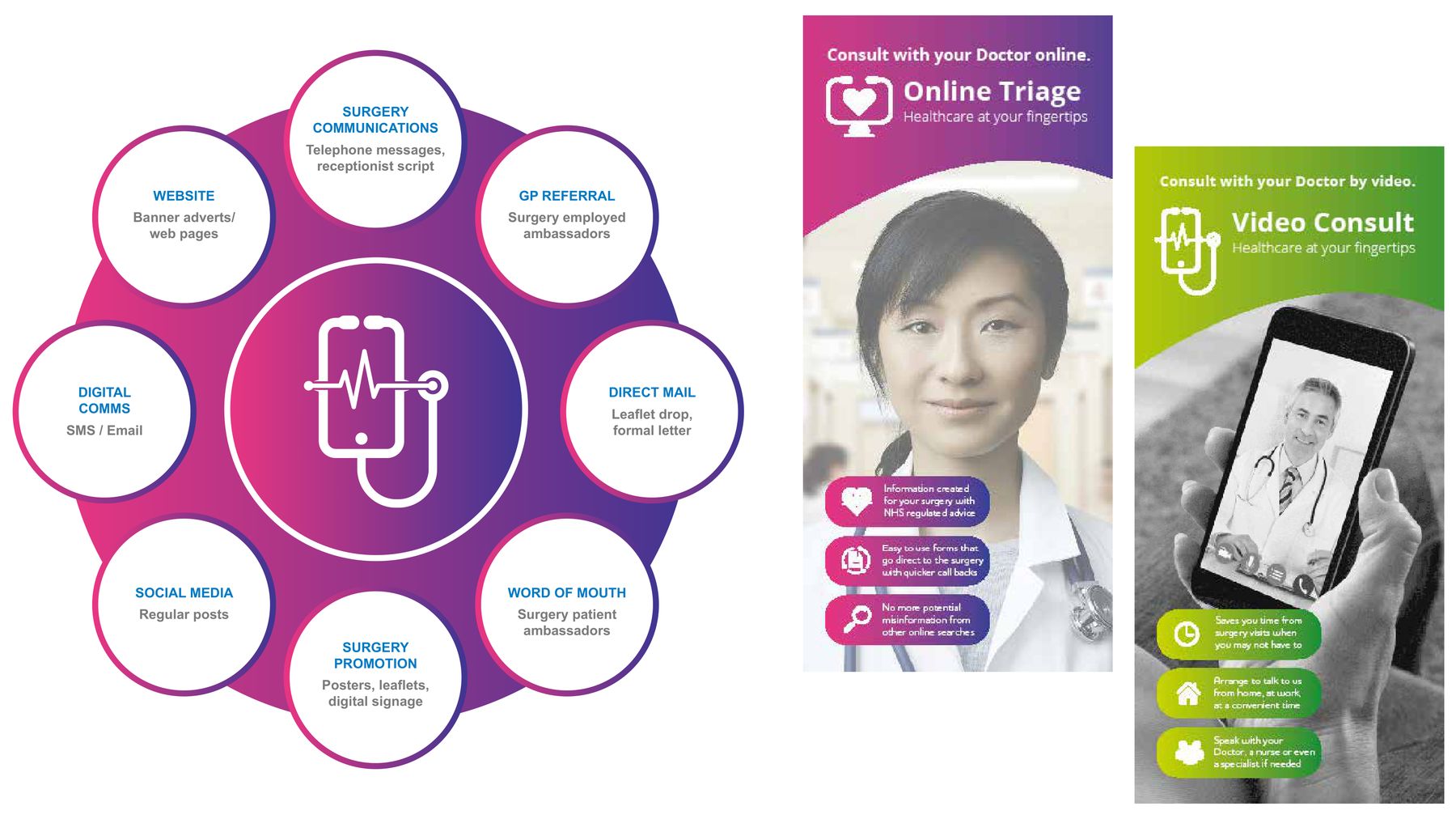
The champion isn’t always a manager. For Emis Health, which supplies software to healthcare providers, the aim was more patients consulting their surgery online. A patient’s choice often runs through the surgery itself: the receptionist on the phone, the staff, other patients. So alongside behavioural design research and messaging built around patients’ pains, the plan equipped the people in between. Surgeries got a marketing toolkit, a receptionist script, staff and patient ambassadors, posters and leaflets, and a programme of social media and SMS nudges.
Where to start
Pick the decision you most want to win next and draw its map. That is human-centred design at its simplest: start with the people who decide, not with what you want to say. It works the same for a healthcare provider, a charity or a public body as for a business.
For more on the proof each reader needs, read social proof that works. If a second pair of eyes would help, our free marketing audit comes back with three things you could fix this month, or just get in touch.
Common questions
Who is in a healthcare buying committee?
Usually a clinical lead, procurement, finance and someone responsible for risk or governance, sometimes with legal and the people who will use the service. Intermediaries who recommend providers to their own clients can matter as much as anyone inside.
How do we find out who is really involved?
Start with your own recent wins and losses: who joined the conversation late, who asked the hard question, who went quiet. Then talk to the people who chose you and, if you can, a few who chose someone else. Ask what happened, not what they look for.
Do we need different content for each member?
No. One story and one brand, with the proof each member needs easy to find: governance for the clinician, documents for procurement, costs for finance.
Does this apply if we market to patients or the public?
Yes. A patient’s choice often runs through a GP, a receptionist, a family member or other patients. Find out who they listen to, and give those people something useful to say.