In this article
Most websites treat social proof as wallpaper. A row of client logos, a five-star average, a testimonial that says “a pleasure to work with”. It is there because everyone has it, and it does almost nothing, because it answers a question nobody deciding is really asking.
That holds for anyone who buys on trust: a company choosing a supplier, a family choosing a kitchen, a candidate choosing a recruiter, a donor deciding which cause to back.
What social proof is actually for
Social proof is evidence that people like you have already made this choice. When we are unsure, we look at what others have done. The psychologist Robert Cialdini popularised the term in his 1984 book Influence.
It works when it reduces a specific fear. The person choosing you is quietly managing a risk: looking wrong in front of colleagues, spending savings on the wrong firm, giving to a cause that changes nothing. They are not asking “are these people popular?” They are asking “has someone like me, with my problem, trusted these people and been glad they did?” Proof that answers that question moves them. Proof that only signals popularity doesn’t.
You hear that fear as soon as you interview the people who choose. When we talked to the solicitors and insurers who choose Bush & Co, one theme was that solicitors were cautious by nature and needed a push to try someone new. For HCML, the intermediaries we interviewed said they rely on suppliers to deliver, and to validate what they recommend to their own clients.
In both cases the chooser’s own reputation rides on the choice. That is the doubt your proof has to settle, and why behavioural design starts with how people actually decide.
People don’t want to know you’re popular. They want to know someone like them took the risk and it paid off.
The kind that doesn’t work
Most proof comes in a few familiar shapes. None is useless. They are just aimed at the wrong question.
| What you usually see | Why it falls flat | What works better |
|---|---|---|
| A wall of client logos | Shows scale, says nothing about a problem like mine | One account from a recognisable peer, with the problem named |
| A star average | Popularity without context | A review that names the situation and the result |
| “A pleasure to work with” | Praise anyone could write about anyone | The specific thing that changed |
| A testimonials page | Filed where few people look | The same words, placed at the moment of doubt |
| A big number with no working | A sceptical reader discounts it on sight | A smaller figure with its period, baseline and source |
A modest figure that shows its working is easier to believe than a big one that doesn’t, and it stands out, because so few people show theirs.
Specificity is the whole game
Specific beats impressive. An account works when it names a real problem the reader has, and a real person who had it solved.
Here is how HCML’s marketing manager opens her account of working with us.
I’ll be honest, plenty of agencies promise they’ll get to know your business. Ideate actually did it. They started with our customers rather than our logo…
It doesn’t say we are brilliant. It names a fear the reader probably has, an agency that promises to listen and doesn’t, then says what was different. Her account does end by calling us “a real pleasure to work with”, and that lands because the specifics come first.
A useful account has four parts:
- A named person and role, or at least a sector the reader recognises
- The situation before, in their own words
- What was done, plainly
- What changed, as specifically as they will allow
HCML’s research points the same way: the intermediaries we interviewed said real stories land harder than messaging built around services.
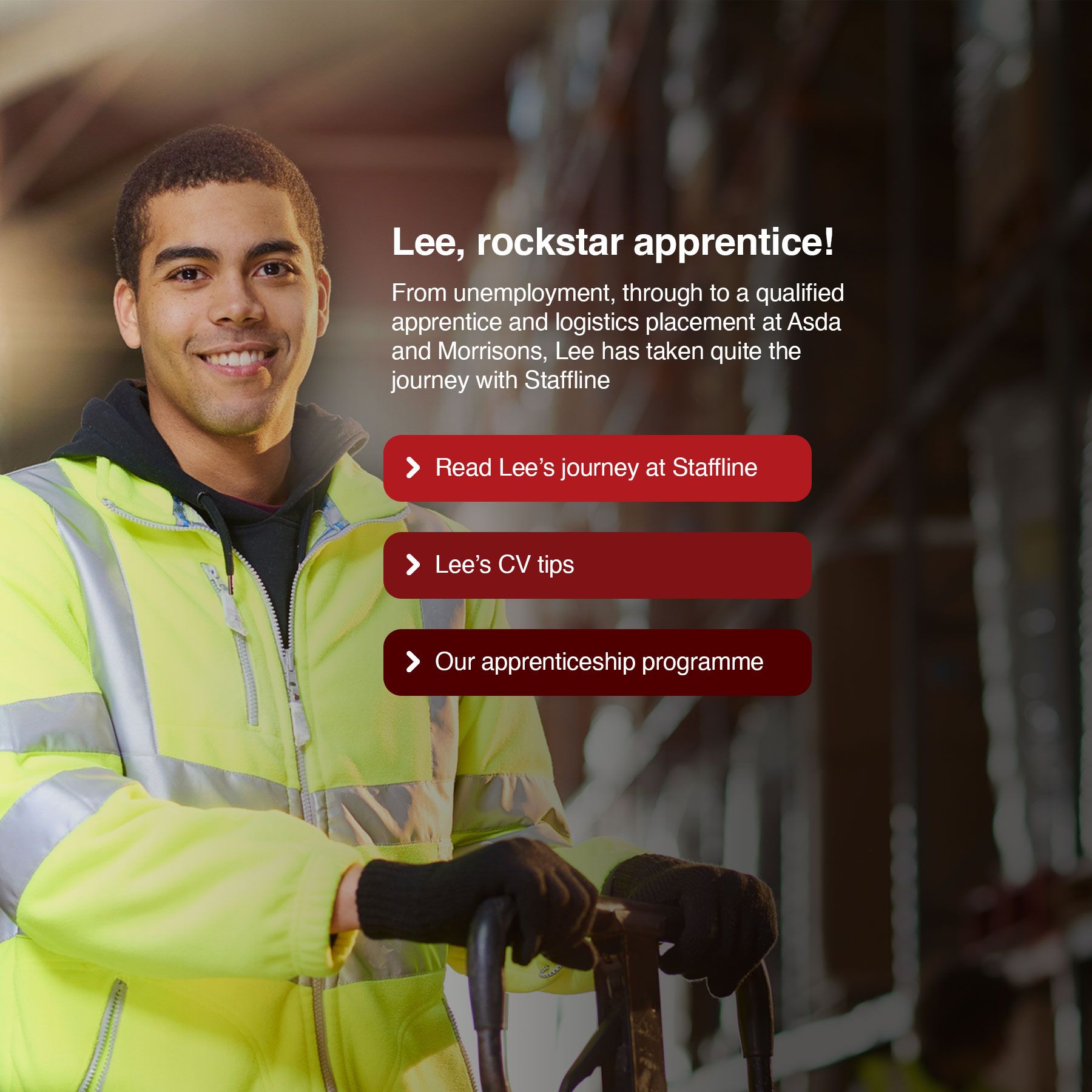
The same anatomy works when people are choosing for themselves. On a recruitment site the reader is often a candidate deciding whether to register, asking the same question: has someone like me done this and been glad? Staffline’s site put the candidate first, and a story with a name, a starting point and a destination answers that better than any claim about vacancies.
Put proof where the doubt lives
Proof is most useful at the point of doubt, not on a page of its own. A testimonials page nobody visits is proof filed where it can’t work. The same quote, placed at the moment of hesitation, can change the decision.
| Where the doubt forms | The question in their head | Proof that answers it |
|---|---|---|
| The first screen of the homepage | Is this for someone like me? | Someone like them, named in a line |
| A service page | Have they solved this exact problem? | A short case story for that service |
| Beside the price or proposal | Is it worth it? | An outcome with its scope and period |
| The enquiry form | What happens if I get in touch? | A client’s words about the first conversation |
| Any bold claim | Says who? | The evidence, right next to it |
Anglia Interiors shows this with homeowners. A fitted kitchen is bought on trust: people want to see the rooms, meet the people and know the business will still be there afterwards. So on the website we designed and built, two customer films sit in the menu itself, beside every room and the showroom’s address. Through the client’s own network, we also arranged for representatives of Anglia’s partners to be filmed, so the business isn’t only speaking for itself. Film earns its place when what people need to trust is a person or a place.

For Bush & Co, the doubt came when a solicitor picked an expert. We built a consultant finder that let them search by geography and specialism, shortlist and download CVs. We reviewed the CVs to bring each consultant’s experience to life, and the expert profiles emphasised past successes. The proof sits where the choice is made, which is the point of a website redesign built around how people decide.
Proof that backs a claim
Some of the best proof isn’t a testimonial at all. It is evidence for something you say about yourself.
Anthony Collins Solicitors works with third-sector and public-sector clients, and publishes a yearly social impact report to quantify its claim to be a social purpose law firm. We helped move it from a lengthy printed report to an interactive one, with film, photography, and the firm’s figures distilled into short, inviting statistics and animated infographics. Showing the real people and communities the firm has helped does more than any line saying it cares.

How to audit your proof
Audit your proof by relevance, not volume. A short way to do it:
- 01List what you have
Logos, quotes, reviews, case studies and figures, and where each one sits.
- 02Name the fear each one settles
If you can’t say which doubt it answers, it is wallpaper.
- 03Map the doubts
Walk the route from first visit to getting in touch and mark where people hesitate. Whoever answers your enquiries will know.
- 04Match and move
Put the most relevant proof beside each doubt. One piece per place is plenty.
- 05Fill the gaps
Where a doubt has no proof, ask a client for it, specifically.
One account from the right peer, placed where the doubt lives, does more than a trophy cabinet. For more on the doubts themselves, read loss aversion, used honestly and designing an enquiry journey people finish. If a second pair of eyes would help, our free marketing audit comes back with three things you could fix this month.
Common questions
What if clients won’t let us use their name?
Ask for the specific outcome rather than praise, and offer to anonymise them by sector, for example “a UK case-management provider”. A specific, sector-matched result still reduces the reader’s fear, even without the logo.
Are client logos worth having at all?
They signal scale and legitimacy at a glance, which has some value. But they don’t reduce a specific fear. Use them as reassurance, not as your main proof.
How do we ask for a testimonial that is actually useful?
Don’t ask “would you write us a testimonial?” Ask three questions: what was going on before, what did we do, and what changed? Write it up in their words, never polished into something they didn’t say, then send it back for approval, including their name, role and where it will appear. If you would rather hand over the writing, see copywriting and content.
Does it work the same for charities, councils and consumer brands?
Yes, though the fear changes shape. A family worries the business won’t be there after the kitchen goes in. A donor wonders whether the money makes a difference. A council wants to know it has worked somewhere like theirs. The rule holds: proof from someone like them, placed where they hesitate.