In this article
Choosing between a marketing agency and an in-house team comes down to what your marketing needs most. An in-house team brings deep knowledge of the organisation and day-to-day availability. An agency brings a wider range of skills, outside experience and the ability to scale up and down. Many organisations end up with a mix of the two.
The right answer depends on your stage, your budget and the problem you are trying to solve, whether you run a growing business, a charity or a public body. This guide sets out the honest trade-offs, what each option really costs, how a mix works in practice, and five questions that make the decision easier.
What an in-house team does well
It knows the business. An in-house marketer lives with your products, your customers and your sales team. They know which service is hardest to explain, which customers matter most and who has to sign things off. That knowledge is hard to replicate from outside.
It is available. Quick questions, last-minute changes and the everyday flow of marketing tasks are easier with someone down the corridor. A press enquiry at four o'clock gets an answer before five.
It is focused. Your organisation is their only client, and their success is tied to yours.
It builds up over time. Knowledge, contacts and judgement accumulate and stay in the business, as long as the people stay.
Where in-house teams struggle
Range of skills. Modern marketing covers strategy, brand, design, writing, websites, search, paid media, social, email, PR, film and data. One or two people cannot be expert in all of them, so the team ends up strong in some areas and stretched in others.
Seniority. Many smaller organisations can afford a capable marketing executive or manager, but not a senior strategist as well. The team then delivers plenty of activity without a clear direction.
Fixed cost. Salaries, benefits, training, software and management time are paid whether the workload is high or low.
Too close to see it. Being inside the business makes it harder to see what a customer sees, or to challenge assumptions the leadership has held for years. It is hard to tell your own managing director that the homepage makes no sense.
Recruitment and turnover. Hiring well takes time, and when someone leaves, a lot of knowledge can leave with them.
What an agency does well
Breadth of skills. Strategy, design, writing, development and channel specialists, without hiring each one. For the different kinds and what they cover, see what a marketing agency does.
Experience from elsewhere. Agencies see similar problems across many organisations and markets, and bring what has worked, and what has not, to yours.
An outside view. An agency is more likely to ask the awkward question, or say what people inside already suspect. The good ones do not rely on opinion to do it. When Staffline asked us for a new website and job search, we ran a six week audit of the brand, focused on data and competitor analysis, followed by workshops with both clients and candidates. That gave a strong steer from evidence rather than taste.
Seniority, part-time. A senior strategist for a few days a month, rather than a full-time salary.
Flexibility. More capacity for a launch or a rebrand, less when things are quiet. As our relationship with Staffline grew, we were asked to take on the content for the site launch too: rich media, film, photography and copywriting. That kind of burst is hard to staff in-house, because the work arrives all at once and then stops.

Where agencies fall short
Less day-to-day knowledge. An agency has to learn your business, and will never know it quite as well as your own people.
Shared attention. You are one client among several. Ask how many, and who decides priorities when two clients want the same week.
Handovers. In some agencies, the senior people who win the work are not the people who do it. Ask who will actually be in the room.
Cost per hour. An agency hour usually costs more than an employee hour, though you only pay for the hours you use and you skip the overheads of employment.
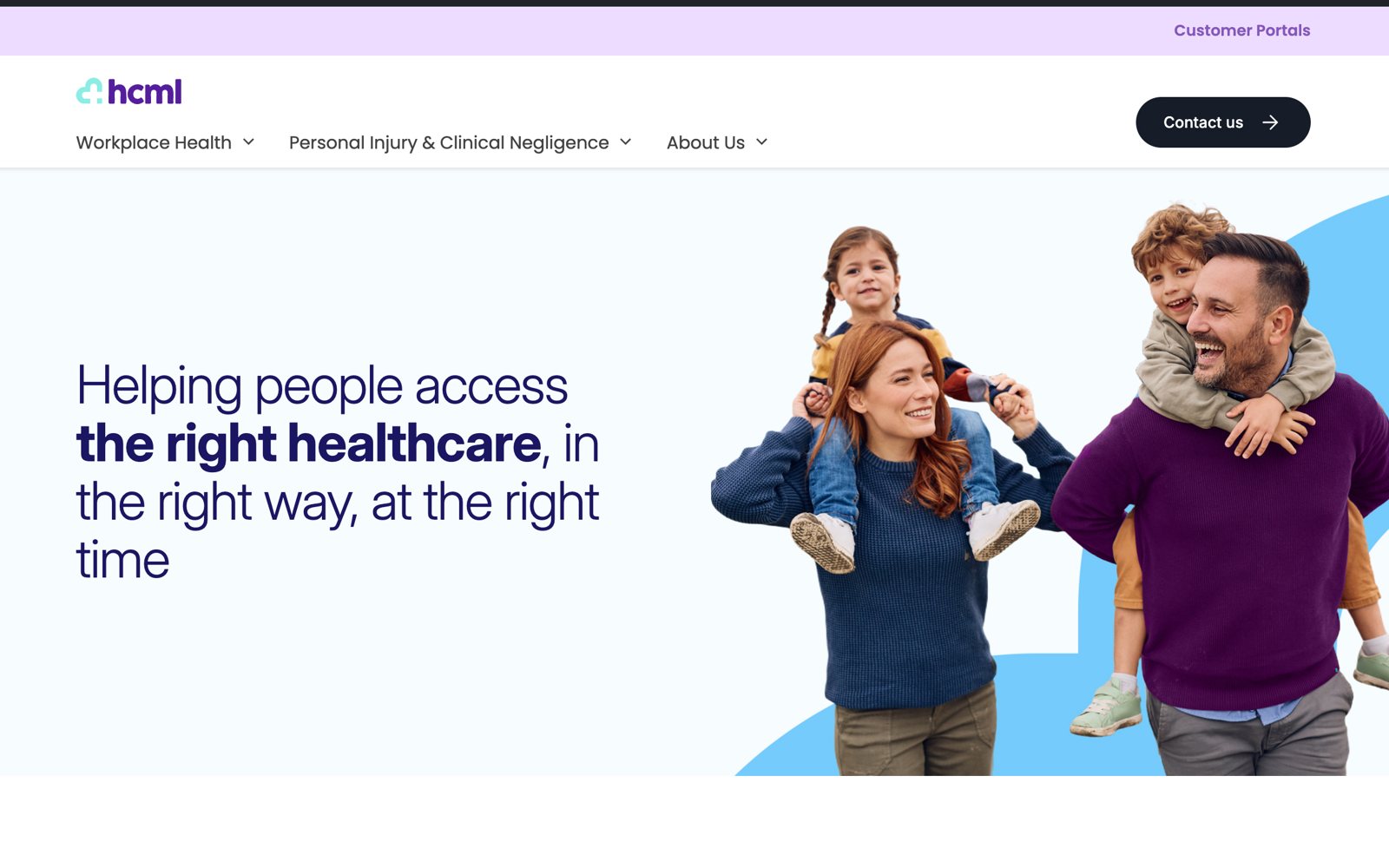
The knowledge gap is real, but method narrows it. An agency that goes to your customers, rather than learning only from you, can find things your own team has not had the time or distance to see. HCML has its own marketing manager. As part of a wider brand and website programme, we ran a behavioural study, interviewing the intermediaries who recommend and buy HCML's corporate health services about how they choose a provider. What we learned then ran through the messaging, LinkedIn content and website.
I’ll be honest, plenty of agencies promise they’ll get to know your business. Ideate actually did it. They started with our customers rather than our logo, and the behavioural research they came back with told us things about how all our various customer groups choose a provider that we genuinely hadn’t seen before.
What does each option really cost?
The honest answer depends on the workload, but the comparison is often made unfairly. A salary is set against an agency's day rate, and the salary looks cheaper. A fairer comparison puts the full cost of a hire on one side:
- the salary, plus employer's National Insurance and pension contributions
- recruitment fees, or the time it takes to recruit well
- equipment, software and subscriptions
- training, so their skills keep pace with the channels
- management time, which someone senior has to give
- cover for holidays and absence, and the gap when someone leaves
On the other side goes the cost of the agency hours you would actually use over a year, not a retainer sized for your busiest month. For steady, everyday work, one capable generalist often comes out ahead. For senior strategy and specialist skills you need only some of the time, an agency is often better value. Most organisations need some of each.
How do they compare?
| In-house team | Agency | A mix of both | |
|---|---|---|---|
| Knowledge of the business | Deep | Built up over time | Deep, and shared with the agency |
| Range of skills | Limited by headcount | Broad | Broad where it is needed |
| Senior strategic input | Expensive to hire | Available part-time | Bought in part-time |
| Cost | Fixed | Flexible | A fixed core, flexible extras |
| Outside perspective | Harder | Built in | Built in |
| Day-to-day availability | High | Agreed in advance | High for the everyday |
| Scaling up and down | Slow | Quicker | Quicker |
Why do many organisations use both?
Because the strengths fit together. A common and effective model looks like this:
- Outside help sets direction. Strategy and positioning and the marketing plan, with the senior experience that is hard to hire. Sometimes that is an agency, sometimes a consultant.
- The in-house team runs the everyday. Social, email, events, sales support and the steady flow of content.
- Specialists come in for the big pieces. A rebrand, a new website or a campaign, where the skills are needed intensely for a short time.
Sayfa Systems shows the hand-off well. They had their own marketing manager. We ran a brand workshop and research project, set the positioning, then rolled out templates for brochures, case studies, e-shots and newsletters. That gave their team the assets to carry on with their own marketing, knowing the groundwork had been done.
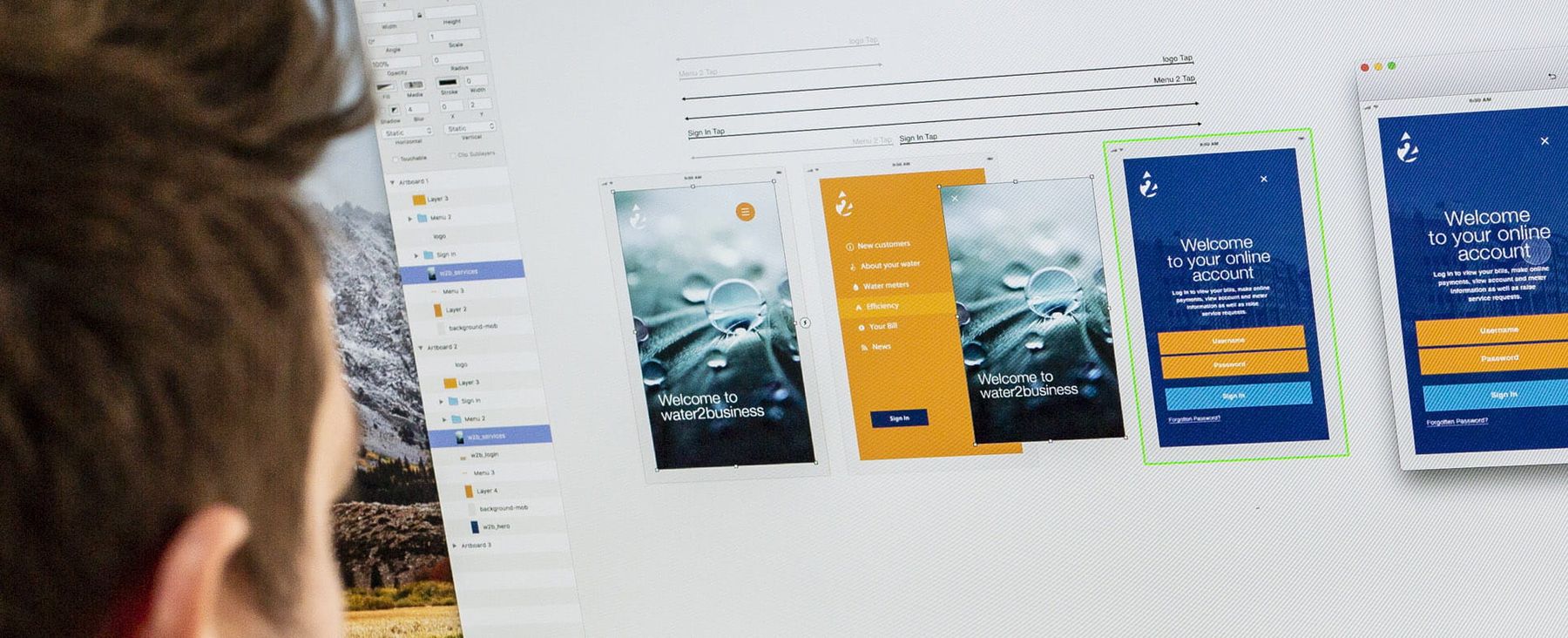
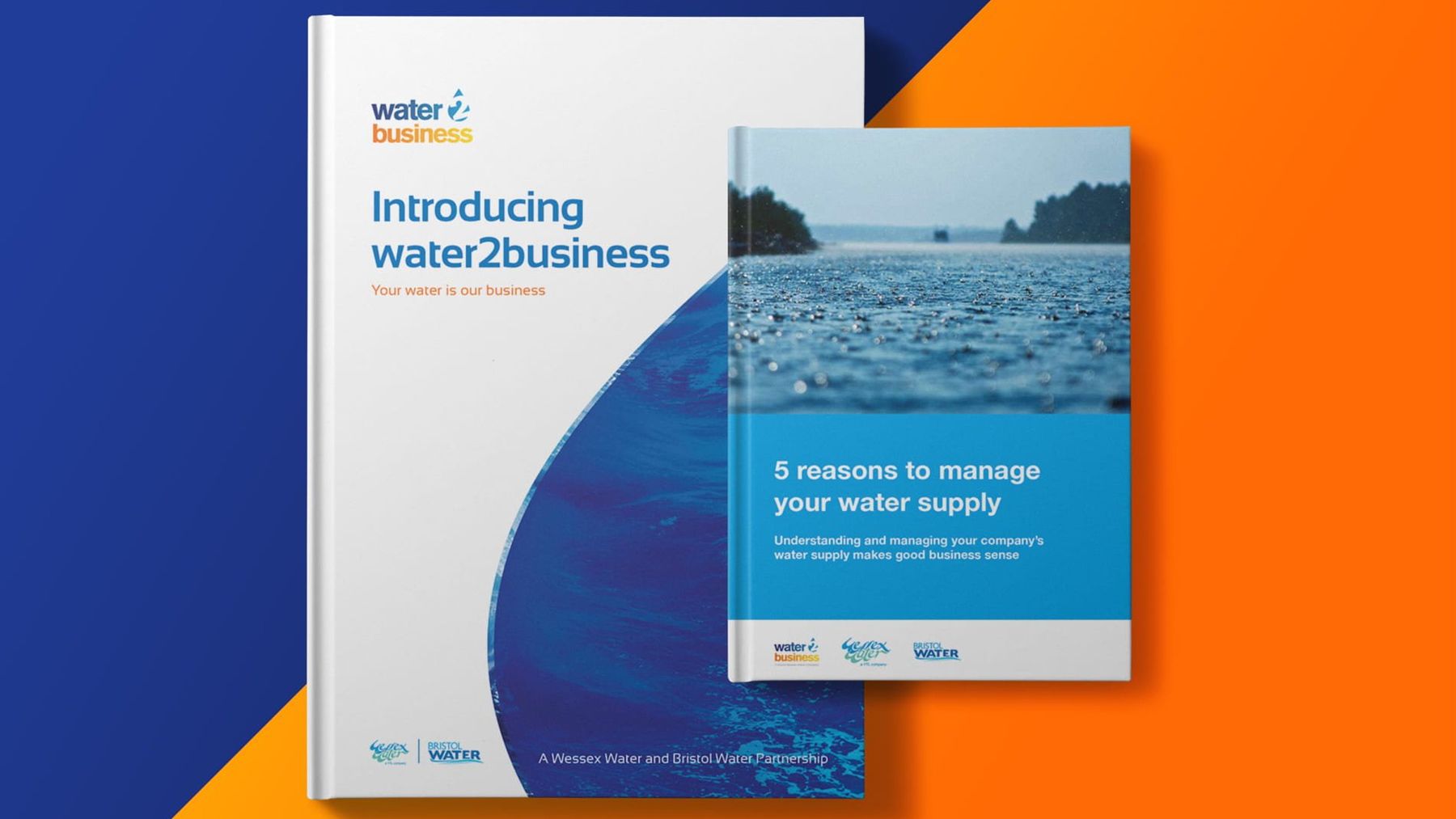
Sometimes the agency is the marketing team. When Wessex Water and Bristol Water set up water2business for a newly opened water market, we created the brand and proposition from scratch, then handled every part of its marketing and communications, from strategic plans and campaigns to the website, events and PR. For a new venture, one team doing the whole job can be the simplest way to get marketing working.
Ideate were incredibly strategic and able to offer real insight into the strange world of marketing which was new to our fledgling business.
How to make a mix work
Without a shared plan, an agency and an in-house team can end up duplicating each other or quietly competing. A few habits keep a mix on track:
- One strategy, written down. Everyone works from the same positioning, audiences and priorities. If it only lives in someone's head, it will drift.
- One owner inside. Someone in the organisation is accountable for marketing.
- A clear split of work. Agree who does what before the first brief, and revisit it when things change.
- Outside help works through your team, not around it. Your people know things an agency never will.
- Leave the team stronger. Templates, guidelines and shared thinking should make your team more capable, not more dependent.
- Measure outcomes, not activity. Enquiries, applications or donations tell you more than the number of posts published.
How do you decide what is right for you?
Ask yourself five questions, in this order.
- 01Is the direction clear?
If you do not yet have a clear strategy, start there. Hiring a team or an agency to deliver an unclear plan rarely ends well.
- 02What skills are missing?
List what your marketing needs over the next year and what you already have. The gaps tell you what to hire or bring in.
- 03Is the workload steady or lumpy?
Steady, everyday work suits an in-house team. Peaks and projects, like a launch, a rebrand or a new website, suit outside help.
- 04What can you afford, fully costed?
Compare the full cost of a hire, including management time and tools, with the outside hours you would actually use.
- 05Who will own marketing?
Someone in the organisation has to be accountable, even if most of the work is done outside.
Where to start
If marketing is not working, the first question is usually not who should do it, but whether everyone agrees on what it should be doing. Get the strategy clear, and the right mix of people becomes much easier to see.
We work alongside in-house teams, setting direction and supporting delivery, and sometimes we are the marketing team for organisations that do not have one yet. Our marketing consultancy page explains how, and how we work sets out the process. If you would like an outside view first, our free marketing audit comes back with three things you could fix this month, with no pitch and no tie-in. Or get in touch to talk about what would suit you.
Common questions
Is it cheaper to hire an agency or an in-house marketer?
It depends on the workload and the skills needed. One in-house generalist can be cheaper for steady, everyday tasks. An agency is often better value for senior strategy and specialist skills you only need some of the time. Compare full costs, not a salary against a day rate.
Is outsourced marketing the same as using an agency?
Mostly. Outsourced marketing means handing some or all of your marketing to people outside the organisation. That can be an agency, a consultant, a group of freelancers or a mix. The questions in this guide apply to all of them.
When should an organisation build its own marketing team?
When the strategy is clear, the workload is steady, and you are ready to manage and develop marketing people properly.
What should I look for in an agency if I already have a marketing team?
An agency that respects what your team knows, fills the gaps rather than duplicating them, and leaves your team stronger, not dependent. Ask who will actually do the work, how they will learn about your customers, and how they will know the work is right before it goes out.