In this article
A marketing consultant helps an organisation work out what to do with its marketing, and why. They look at what is working and what is not, get to know the market and the people you need to reach, then build a strategy and a practical plan. After that they deliver it, support your team to deliver it, or both. Their value is senior judgement applied to your specific problem.
In short, you bring a consultant in to make better decisions, not just to do more marketing.
That holds for every kind of organisation. A manufacturer, a shop, a charity and a council all face the same questions. Who do we need to reach? What should we say? Where should the effort go? This guide explains how a consultant answers them, and how to get your money's worth.
What is a marketing consultant?
A marketing consultant is an experienced marketer who works with an organisation from the outside, usually for a defined project or a set period. Some work alone. Others work within a small consultancy that can also design, write and build.
The defining feature is seniority. You hire one for experience you do not have in-house, or for an objective view of a problem your team is too close to see.
What does a marketing consultant do, day to day?
The work usually follows a clear sequence. On our own marketing consultancy projects it runs in five stages.
- 01Marketing assessment
Getting under the skin of the organisation, the market and the customers. What is working, what is not, and where the real opportunity sits.
- 02Strategy development
Turning what the assessment found into a clear strategy. Who you need to reach, what to say to them and why, and where to focus.
- 03Tactical planning
Breaking the strategy into specific steps: the channels, the content, the campaigns and the order to do them in.
- 04Implementation
Putting the plan into action, whether the consultant delivers it or works alongside your team so momentum does not stall.
- 05Measurement and analysis
Tracking results and refining as you go, so you can see what is working, what the money is achieving and what to do next.
Listing the stages is easy. The difference between a useful consultant and an expensive one is in how each is done.
Why the assessment matters most
A thin assessment reads your website, your analytics and your competitors, then tells you what you already suspected. A useful one also hears from the people who choose you, or choose not to.
We read three things together:
- What the organisation tells us about itself.
- What the data shows about how people already behave.
- What customers, supporters or users say when someone asks them directly.
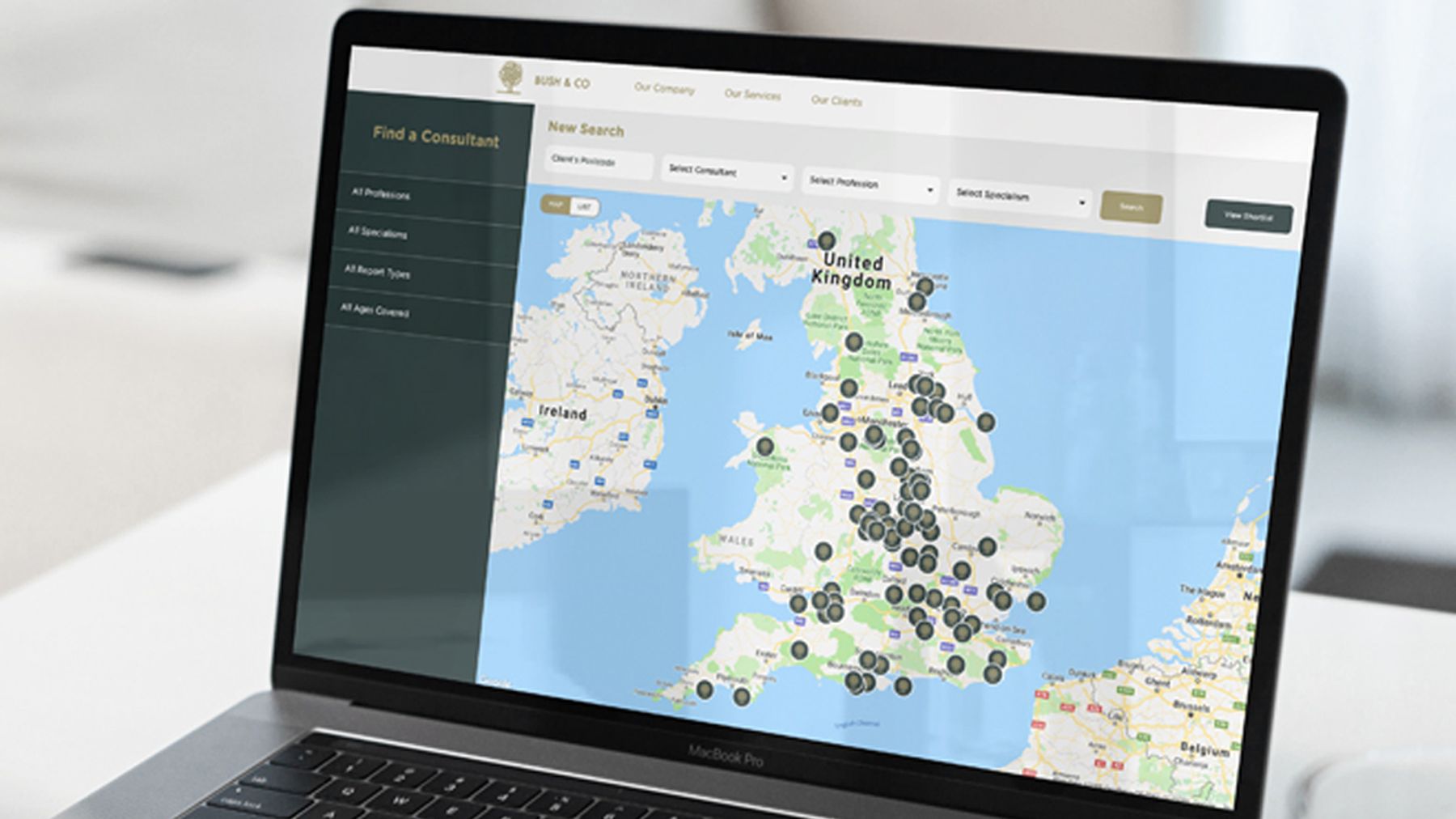
The first two are quicker to gather, and on their own they can mislead. The third takes more effort, and it is often where the brief changes. When we interviewed the solicitors and insurers who choose Bush & Co, asking how and why they used the service, one of the themes that kept coming back was simple: solicitors searched for a consultant by geography first. That changed the focus of the new website, which was built around a map of consultants that people can filter by specialism, geography and experience.
Assessment also means looking hard at the evidence you already have. For Staffline, it was a six-week audit focused on data and competitor analysis, followed quickly by workshops with clients and candidates. The results gave a strong steer on what needed to be built, and an SEO strategy to go with it.
Their consultative approach unveiled to us a multitude of improvements we could make to our digital strategy.
At the end of this stage you should have a short, honest account of where you stand, in plain language, that your own team recognises. If it reads as though it could have been written about anyone, it was not an assessment.
From strategy to a plan people can use
If your positioning is unclear, the strategy stage is where it gets settled, because every later choice depends on it.
A good plan then follows from what was learned, not from a list of channels the consultant happens to like. Our behavioural study for HCML found that the intermediaries who recommend and buy its corporate health services turn overwhelmingly to LinkedIn for credible content, and want to hear from a provider all year round rather than be bombarded. The plan followed from that: a year of content and communications built on a LinkedIn calendar, segmented email programmes, landing pages and lived experience storytelling.
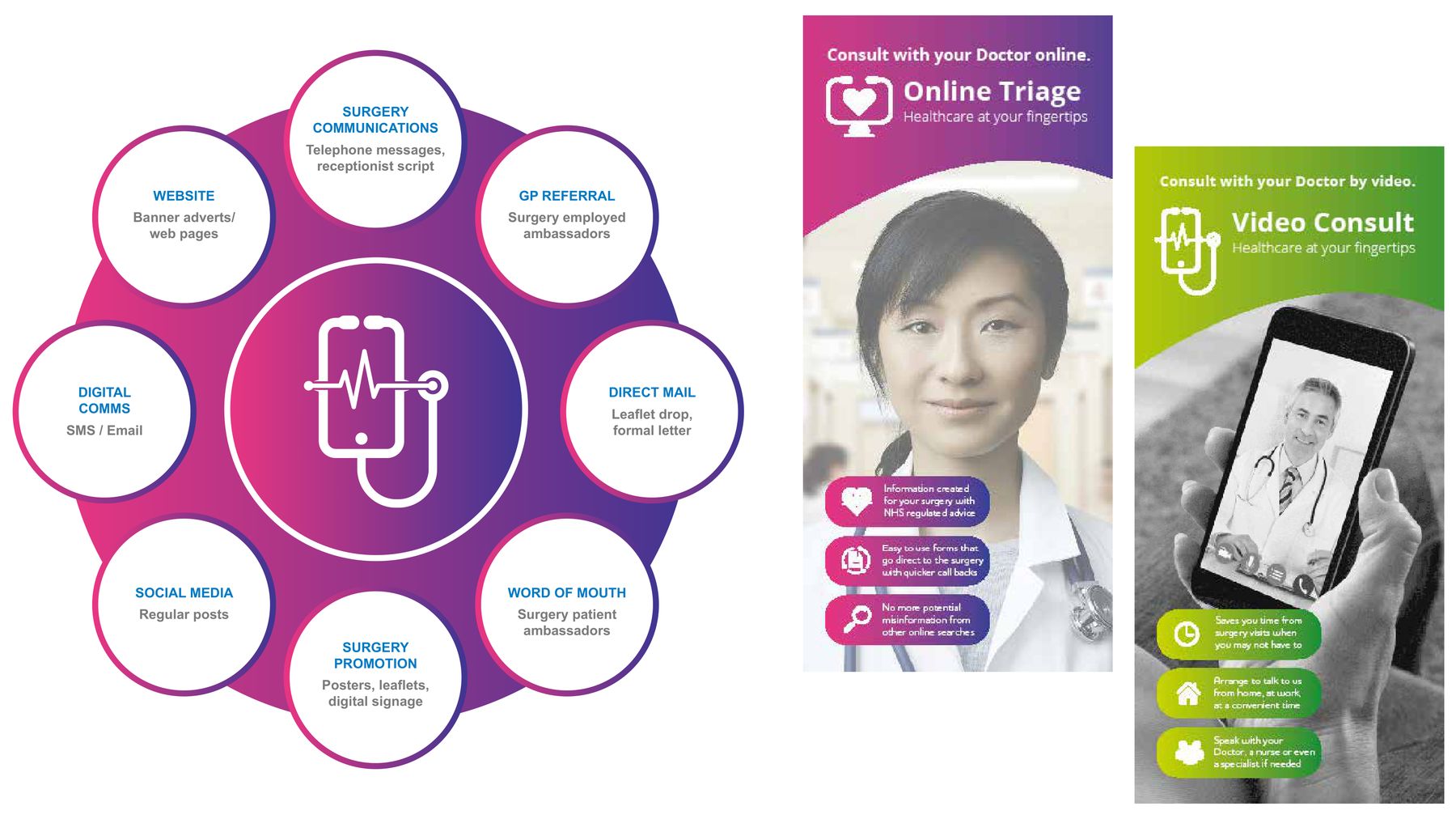
The same thinking works when the audience is the public. For Emis Health, a provider of specialist software to healthcare providers, behavioural design research shaped a messaging strategy built around patients' frustrations and worries. The plan then ran across eight channels, from the receptionist's script and posters in the surgery to SMS nudges, social media and the website.
A realistic plan is also honest about time and budget. It says what happens first, what waits, and what you will stop doing to make room.
Who does the work?
Implementation is where consultants differ most, so ask about it before you start. There are three common arrangements.
- The consultant hands over. You get the strategy, the plan and the tools, and your own team runs it.
- The consultant works alongside your team. They set direction, check the work and step in where skills are missing.
- The consultant delivers. The same people who did the thinking make and run the marketing.
All three can work. With Sayfa Systems, once the brand strategy and guidelines were in place, we produced templates for brochures, case studies, e-shots and newsletters, which gave the team the assets to carry on with their own marketing. With water2business, we handled every part of the marketing and communications, from the strategic plans to social media, e-shots, a new website, events and exhibitions.
What matters is that the choice is made on purpose. A strategy with no owner tends to sit in a folder.
When should you hire a marketing consultant?
The common moments are:
- Marketing is busy but not working. Lots of activity, not enough enquiries, sales or sign-ups, and no clear reason why.
- The organisation has changed. New services, a new market or a bigger audience, and the marketing has not caught up.
- The offer is hard to explain. Conversations depend on a few people, and the website does not do the job on its own.
- There is no senior marketer. A capable team, or a managing director doing marketing in the gaps, with no one to set direction.
- Before a big investment. A new website, a rebrand or a campaign, where getting the thinking right first saves money later.
Marketing consultant or marketing agency?
There is overlap, and the labels are used loosely. As a rule, a consultant focuses on the thinking and an agency focuses on delivery. We cover the agency side in what a marketing agency does.
| Marketing consultant | Marketing agency | In-house marketer | |
|---|---|---|---|
| Hired for | Judgement and direction | Making and running marketing | Day-to-day ownership |
| Typical output | An assessment, a strategy and a plan | Campaigns, content, design and websites | Steady delivery from inside |
| Best when | Direction is unclear or a big decision is coming | Direction is clear and you need skills and capacity | The work is constant and the direction is settled |
| Watch for | A report nobody uses | Activity without a clear reason | One person expected to cover everything |
Many organisations need both thinking and delivery, and some teams offer both: the strategy, then the brand, website and campaigns that carry it. The advantage is that the people who did the thinking also shape the work, so less gets lost between the two. That is how we work at Ideate Partners, as a full-service, human-centred design agency: one small, senior team from the first interview through to the campaigns.
What a good consultant will not do
A good consultant will not hand you a long report and disappear. The strategy has to be usable by the people who will deliver it.
Nor will they promise results they cannot control, recommend channels before they understand your customers, or rush the thinking to get to the activity. The thinking is what you are paying for.
How to get the most from a marketing consultant
Be clear on the goal. What does the organisation need marketing to achieve in the next year? More enquiries, more donations, more people using a service? Pick one to lead.
Give them access. To the data, to the people who sell or serve, and ideally to some customers. The best insight comes from the people who buy from you, use your service or support your cause.
Expect challenge. A consultant who agrees with everything is not adding much. You want someone prepared to tell you which of your favourite ideas the evidence does not support.
Ideate were incredibly strategic and able to offer real insight into the strange world of marketing which was new to our fledgling business. Always professional, flexible and not afraid to lead us into producing solutions that would benefit our brand.
Decide who delivers. Agree early whether the consultant, your team, an agency or a mix will carry out the plan.
Agree how you will measure it. Decide what success looks like before the work starts. Measure what people do, not how busy the marketing looks.
Is a marketing consultant worth it?
It depends on the problem. If your marketing lacks direction, a consultant can save a great deal of money that would otherwise go on activity that does not work. If the direction is clear and you simply need more hands, an agency or an extra hire may be the better choice. We look at that decision in marketing agency or in-house team.
Where to start
Before you speak to anyone, write down what is not working and what you would like to be true in a year. That gives a consultant something real to respond to.
If you would like an outside view first, our free marketing audit is a simple place to begin. We review your website and marketing and come back with three things you could fix this month. No pitch, no tie-in. Our marketing consultancy page explains how the full work runs, or you can get in touch.
Common questions
What qualifications does a marketing consultant need?
There is no required qualification. Look for relevant experience, examples of similar problems solved, and a clear method for getting to know your organisation and the people it serves.
How much does a marketing consultant cost?
Consultants usually charge by the day, by the project or as a monthly retainer. Ask for a fixed scope and price for the assessment and strategy, so you know what you will get before you commit to anything ongoing.
How long does a marketing consultancy project take?
It depends on the scope. An assessment and strategy is a defined project. Ongoing support or delivery can run for months or years.
What is a fractional marketing director?
A senior marketer who works part-time for an organisation, often a few days a month, leading the strategy and the team without the cost of a full-time hire. It is one form of marketing consultancy.
Do marketing consultants only work with businesses?
No. Charities, public bodies and membership organisations use them too. The goal may be donations, sign-ups or people using a service rather than sales, but the method is the same.