In this article
Some buyers are trained to disbelieve you. The finance director who has sat through a dozen pitches. The solicitor whose name goes on every expert they recommend. The donor who wants to know where the money goes.
In financial services the regulator builds the caution in. The Financial Conduct Authority expects promotions to be fair, clear and not misleading, and not to play up the benefits without a fair and prominent indication of the risks. So every firm hedges in much the same way, and the buyer has heard it all before.
In that setting the usual marketing instincts work against you. Sound confident, promise outcomes, polish everything: each one makes a careful buyer more careful.
Why the usual instincts backfire
Confidence reads as sales. Polish reads as spin. A big promise reads as a catch that hasn't been found yet. The sceptical buyer isn't weighing your claims. They are scanning them for the thing you aren't saying.
Everyone reaches for the same safe, grand words. Here is how a few of them land.
| What the page says | What a sceptical reader hears | What to do instead |
|---|---|---|
| Market-leading | Says who, measured how? | Name the measure, or cut the word |
| Tailored solutions for every client | The same as everyone else | Describe one thing you did differently for one client |
| Guaranteed results | So what's the catch? | Say what you control, and what you don't |
| Trusted by hundreds of organisations | Which ones, and would they say so? | Name one, with their permission, and what you did |
| Our expert team | Everyone says that | Show a real person, their background and how to reach them |
None of the left-hand lines is a lie. They just give a careful reader nothing to hold, and something to doubt.
Scepticism is risk-awareness doing its job
The way to reach a sceptical buyer is to stop trying to overcome the scepticism and start respecting it. The buyer is protecting a budget, a reputation or someone else's interests.
Marketing that acknowledges the risk, names the thing that usually goes wrong and is honest about what you don't do earns more trust than any amount of reassurance.
Don’t try to beat the scepticism. Respect it, and sound like the buyer’s own caution rather than a pitch.
We heard this directly when we interviewed the solicitors and insurers who choose Bush & Co, a case management and expert witness business working on catastrophic injury. Solicitors were cautious by nature and needed a push to try someone new. And case managers were king: relationships rested on the quality and personality of the consultants.
The push was not a louder claim. It was a consultant finder built on a map, filtering by specialism, geography and experience, where solicitors could shortlist, download CVs and save their searches. A cautious buyer could check the people before picking up the phone. That is behavioural design at its most practical: lowering the risk of saying yes, rather than raising the volume.
For HCML, the intermediaries who recommend corporate health providers told us they rely on suppliers to validate what they recommend to their own clients. Their reputation travels with every recommendation. They also said real stories land harder than messaging built around services. We know the feeling from the other side of the table. Here is HCML's marketing manager on agencies.
I’ll be honest, plenty of agencies promise they’ll get to know your business. Ideate actually did it.
Say one plain thing
When everyone hedges, the organisation that says something plainly stands out as the one with nothing to hide. A clear, specific claim you can stand behind beats a grander one wrapped in qualifiers. Give the buyer less to be suspicious of, not more to be impressed by.
That is a positioning decision before it is a copywriting one. You can only say one plain thing once you have decided what the one thing is. Positioning on a point of view goes into how.
Cambourne, a Midlands financial services firm advising private and corporate clients, is a good example. After workshops and a client survey, we gave it a strong yet simple identity meant to convey its direct and honest approach to financial management. The website we launched with it let clients, for the first time, see transparent and immediate information on their funds and investments through a secure portal, at any hour. Plain design, and something clients could check for themselves.

Show the working, not the conclusion
A sceptical audience trusts evidence over adjectives. Show how you reach a conclusion, not just the conclusion. Name your method. Point to the specific, checkable thing rather than the sweeping promise. When every competitor claims expertise, demonstrating a little of it does more than asserting a lot.
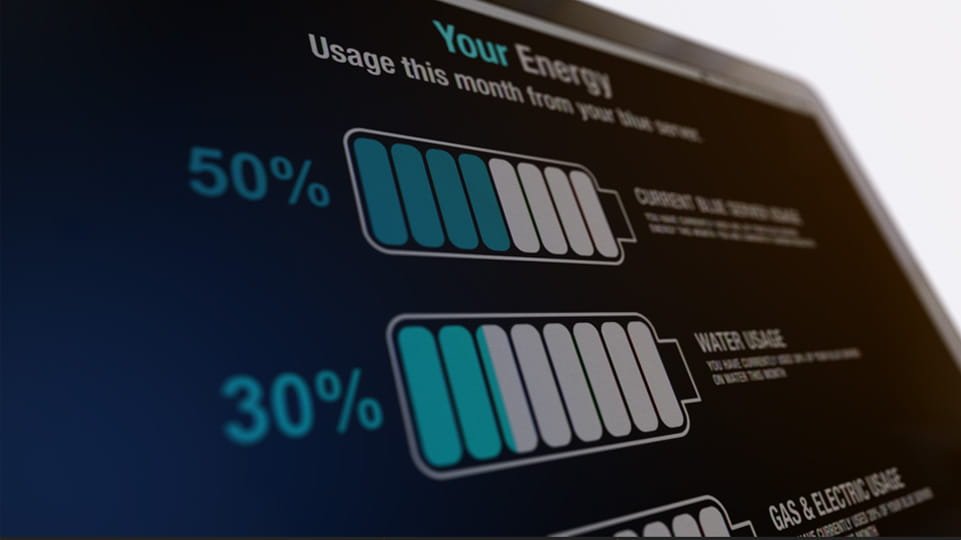
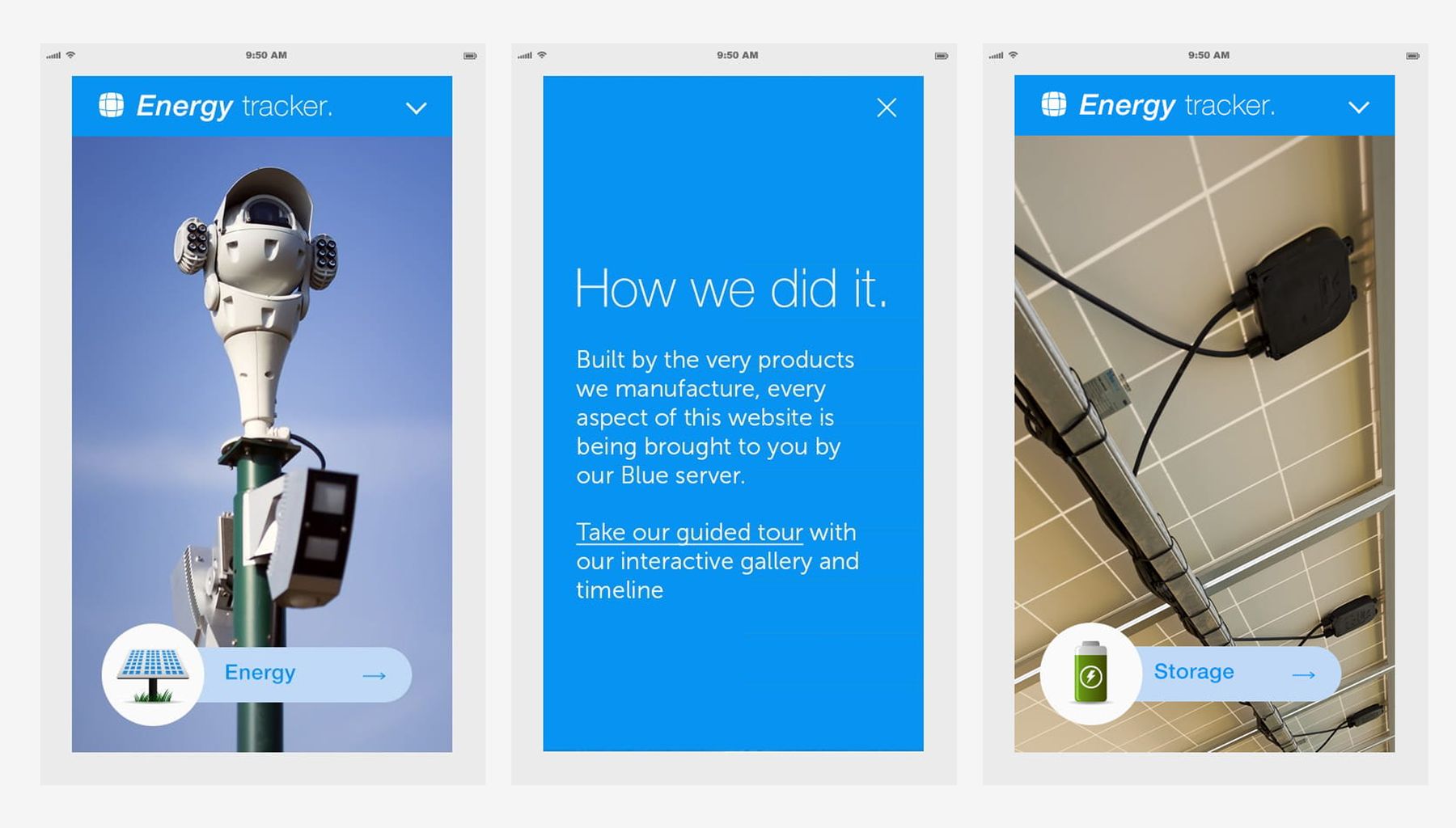
Conergy is the clearest example in our own work. It arrived in the UK with a global reputation in solar, in a crowded and technical market. Rather than tell people it walked the walk, we proposed powering its UK website from one of its own solar installations. Running on solar, wind and battery energy, the site let visitors see real-time data and the savings from an off-grid supply. Proof, not just promise.
Evidence can also be plain numbers, well presented. When we worked with Anthony Collins Solicitors, the firm produced a yearly social impact report to quantify its claim of being a social purpose law firm. A claim like that invites doubt, so the report put numbers behind it. The firm did not want to seem imperious, so the numbers had to feel friendly as well as professional. We helped move a lengthy printed report into an interactive one, with short, punchy messaging, animated infographics, film and photography.

Your own version can be smaller: a page that explains your method, a profile of a real person, a case study that admits what was hard. Our article on social proof that works looks at which kinds a careful buyer believes.
Read your own marketing as a sceptic
A short test for a homepage, a proposal or an appeal:
- 01Read it as your most cautious buyer
Pick a real one, ideally someone who nearly didn't choose you. Read every line as if you had been let down before.
- 02Circle the adjectives
For each "leading", "trusted" or "innovative", ask what fact would make it true. Use the fact and drop the word.
- 03Find the catch they are looking for
Write down the risk a careful buyer worries about most. If you never mention it, they will assume you are hiding it.
- 04Say what you don't do
One honest line about who you are not for makes everything else easier to believe.
- 05Add one thing they can check
A named method, a real example, a person they can call, or a figure with its source and date.
Plain is not the same as dull
Plain words can still be warm, and evidence can still be beautifully made. The aim is to be the one organisation in the room that sounds like it is levelling with the buyer. In any market built on trust, that isn't a soft advantage. It's the whole thing.
If you would like a second pair of eyes on how your marketing reads to a careful buyer, our copywriting and content work starts there, grounded in human-centred design. We are happy to talk it through.
Common questions
Won't admitting what we don't do cost us work?
It may cost you some enquiries that were never right for you. What it buys is belief in the rest. A buyer who trusts your "no" finds it much easier to trust your "yes".
Does this apply to consumers, donors and the public sector, or only business buyers?
All of them. A family choosing a financial adviser, a donor deciding whether to give and a public body accountable for every pound are all managing risk. The words change, the principle doesn't.
We work in a regulated sector. Doesn't compliance make us sound like everyone else?
Compliance limits what you can claim. It doesn't stop you being plain or specific. You can describe your process, introduce your people and explain what happens when something goes wrong. Run the final words past whoever signs off your promotions.
How do we use figures without sounding like a sales pitch?
Give every figure a source, a date and a clear statement of what it measures. A smaller number you can stand behind beats a large one with no baseline, because the careful buyer will discount the large one on sight.