In this article
When someone buys for an organisation, they are rarely deciding alone, and they are never only spending money. They are putting their name to a choice that colleagues, and often procurement and finance, will look at. If it goes well, it was a sound decision. If it goes badly, it was theirs.
The patterns behind how people choose still apply. The difference is that every nudge has to hold up in a room you are not in. This guide is for leadership teams whose buyers choose for a business, a charity or a public body.
What changes when someone buys for an organisation
Mostly four things.
- Several people have a say, and the person who finds you is rarely the only one who decides.
- The risk is personal. A poor choice costs the organisation money, and the person who made it some standing.
- The choice has to be justified, often in writing: a business case, a scoring sheet, a note to the board.
- Someone else makes your case, in meetings you never see.
Mapping who is in the room is a job of its own, covered in healthcare marketing and the buying committee, and it works well beyond healthcare.
Even two groups buying the same service can want different things. In our work for HCML, the audience map for personal injury set defendant insurers, marked down as risk-averse and driven by cost, beside claimant solicitors, who wanted to be kept informed and worried about their reputation. Same provider, two quite different sets of worries.

Where behavioural design fits
Behavioural design uses what we know about how people really decide to make your brand, website and marketing clearer and easier to say yes to. Used honestly, it only ever points at things that are true. When an organisation is buying, its main job is not to persuade harder. It is to make a sound choice easier to make, and easier to defend. A nudge that gets a click can still leave the buyer with nothing to say when the finance director asks why.
It also helps to name every lever you use. For Emis Health, a provider of specialist software to healthcare providers, our research meant interviews with patients, calls with surgeries and questions to doctors. Each nudge we then recommended carries the name of the principle behind it, from default to social proof. Those patients were choosing for themselves, which the companion guide covers, but the habit travels. A nudge with a name and a reason can be questioned, tested, and dropped if it is wrong.
Defaults and effort: make the sound choice the easy one
Every buyer starts with a default: stay with the current supplier, or do nothing. Staying put rarely needs a business case. Switching usually needs a paper trail. It is one reason defaults quietly decide more than your sales pitch.
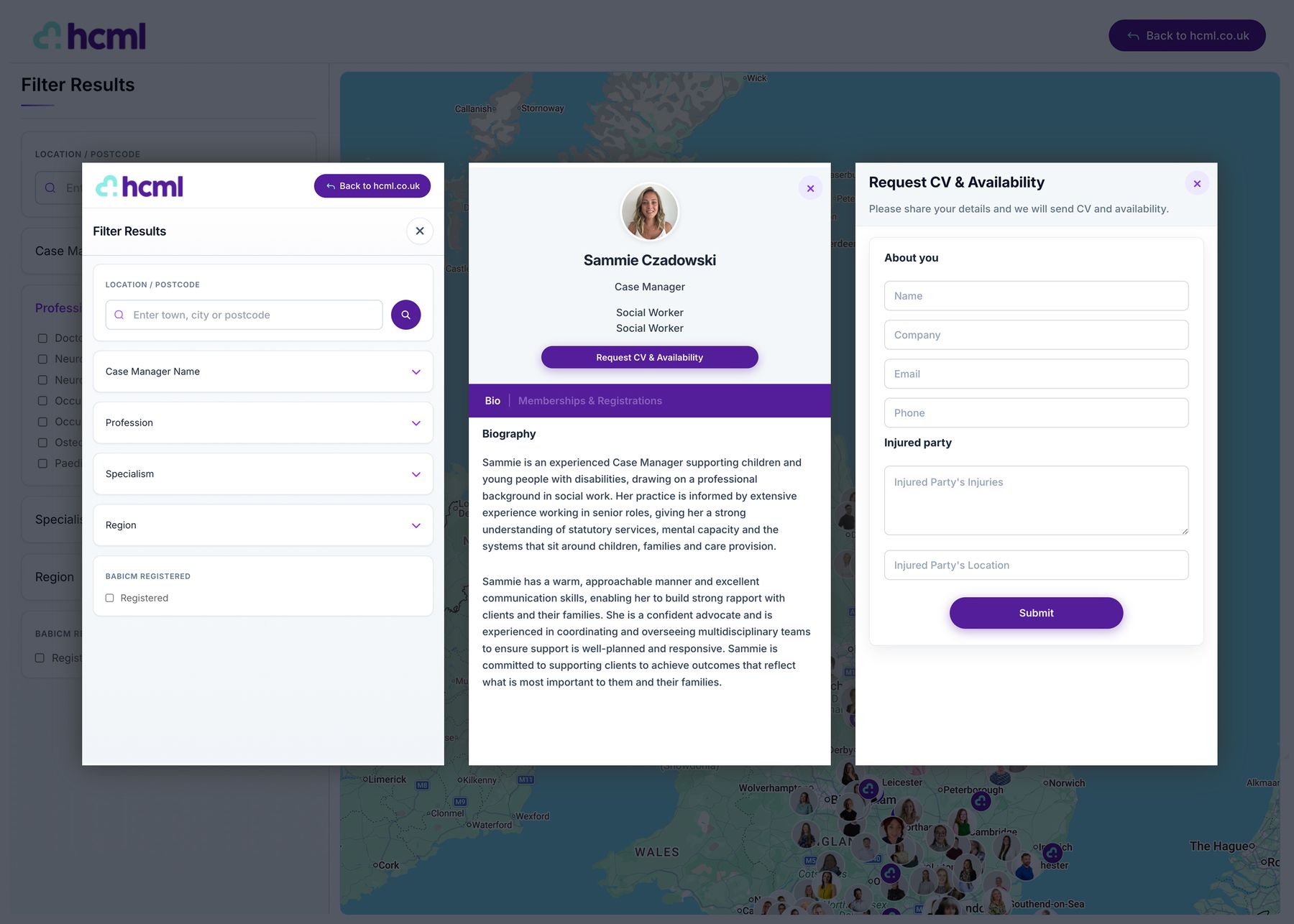
Effort includes the work of justifying the choice afterwards. So the easiest next step is often one that hands the buyer something to take back to colleagues. In the case manager finder we built for HCML, the next step from a profile is a request for a CV and availability. It commits nobody, and it gives them something to show.
Loss aversion: lower the cost of being wrong
Loss aversion, used honestly covers the idea, and why fear backfires. When someone buys for an organisation, one loss tends to outweigh the rest: being the person who chose the supplier that let everyone down. A false deadline makes that worse. It is one more thing they would have to explain.
What helps is an answer they can write down: what happens in the first month, who they call if something goes wrong, and what happens then. If those answers are already on your website and in your proposal, the buyer doesn’t have to make them up in front of colleagues.
Social proof and authority: proof they can repeat
Proof here has two audiences, the person deciding and everyone they have to convince. So ask less whether a piece of proof is impressive, and more whether it can be repeated. A named peer, an outcome with its date and scope, a reference who will take a call: each survives being pasted into a business case. Social proof that works covers which kinds a careful buyer believes.
Authority is the easiest lever to fake. The honest version is authority a buyer can check and quote: accreditations you actually hold, named people with real experience. The HCML finder builds it in. Each case manager’s profile has a tab for memberships and registrations, and the filters include BABICM registration. A buyer can check it before they call, and quote it afterwards.
Reciprocity and timing: be useful before you are needed
People tend to return a favour. For someone buying for an organisation, the gift that works is something useful they can pass on: a clear guide, an honest review, a way of thinking about their problem. The intermediaries we interviewed for HCML told us they hunt for credible content to share onward. Material like that helps them as well as you. If a gift only works as bait, it isn’t one.
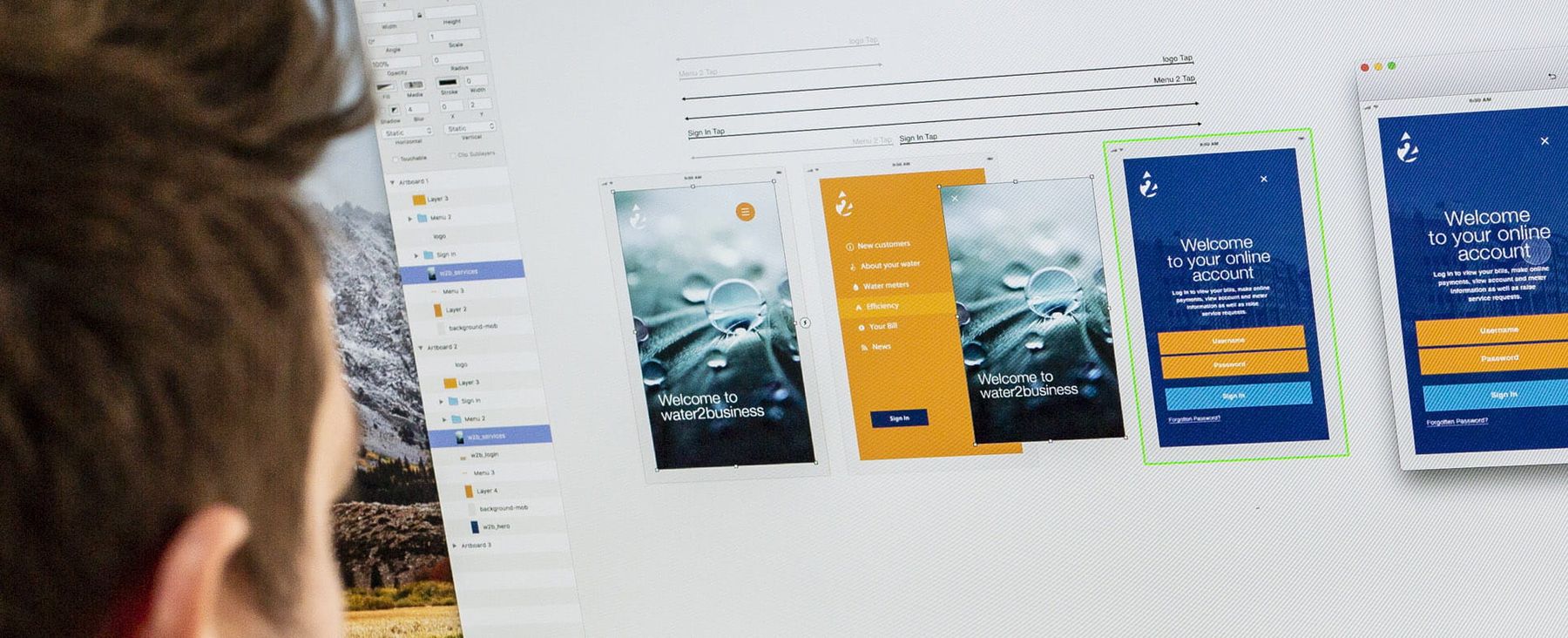
Organisations buy on their own calendar: budget rounds, renewals, the week a current supplier lets them down. You rarely know when that will be, so the job is to be useful, and still there, when it comes. For water2business, the moment was a change in the rules, when businesses could choose their water supplier for the first time. We built an info hub to be the first point of call for balanced, objective information on what that could mean for them.
Design for the person who argues your case
Someone inside the organisation usually ends up making your case for you. Marketing to a buying committee covers what to give them. The behavioural point is that every lever above applies to them too. Less effort: a summary they can forward without rewriting. Less risk: proof they can stand behind when someone pushes back. A clear default: one next step to suggest, not five. That is the job of a sales deck and the material around it.
A useful test: write the email your champion would send their finance director recommending you. If you can’t write it from your website and your deck, neither can they.
What a leadership team should ask for and check
Whether the work is done in house or by an agency, these are worth asking before anything goes live.
- 01The research
Who did we talk to? The people who choose, including some who chose someone else, not only our own view. What good discovery actually looks like covers how.
- 02Today’s default
What happens if a buyer does nothing, and what does staying put cost them?
- 03The lever and the reason
Each nudge names the behaviour it addresses and the evidence for it.
- 04The procurement test
Could the buyer explain each nudge to their own procurement team without embarrassment? If not, take it out.
- 05What the champion forwards
The summary, the proof and written answers to the hard questions, each ready to send.
- 06What gets measured
Behaviour, not opinion. Where people stop, what they download, what they ask first.
Where to start
Choose one decision you would most like to win. Walk it as your champion would, from the first search to the email that gets it signed off, and note where they would get stuck. Human-centred design starts with the people who choose, and our customer research is how we talk to them. If an outside view would help first, our free marketing audit comes back with three things you could fix this month, or just get in touch.
Common questions
Is behavioural design manipulative when the buyer is a professional?
Not when it points at things that are true. Making a sound choice easier to defend helps a professional do their job. Fake deadlines and buried options don’t, and a careful buyer spots them quickly.
Does it help when buying goes through a formal tender?
Yes, though most of the work comes earlier: being known before the specification is written, being easy to shortlist, and giving the people involved something credible to read. Inside the tender, the job is clear answers that are easy to score.
Does this apply to charities and public bodies?
Yes. Someone choosing a supplier for a charity, or commissioning a service for a council, carries the same personal risk, often with donors’ or public money on top. The procurement test matters even more.