In this article
A brochure website is a small website with limited functionality. It has a handful of pages that say who you are, what you offer, why you can be trusted and how to get in touch. It has no logins, shop, booking engine or custom tools, and it changes only now and then.
For many organisations, it is exactly the right kind of website.
What does a brochure website include?
Most brochure websites have five to ten pages, along these lines:
- Home. What you do, who it is for, and the next step, all clear within a few seconds.
- About. Who is behind the organisation, and why that matters to the person deciding.
- Services. What you offer, often with a page for each main service.
- Work or case studies. Proof that you have done it before.
- Contact. How to get in touch, with a short form, an email address, a phone number and, if people visit you, an address and opening hours.
Many sites also carry news, testimonials and legal pages such as a privacy and cookie policy. None of these is hard to build. The hard part is deciding what each one has to say.
A brochure website example
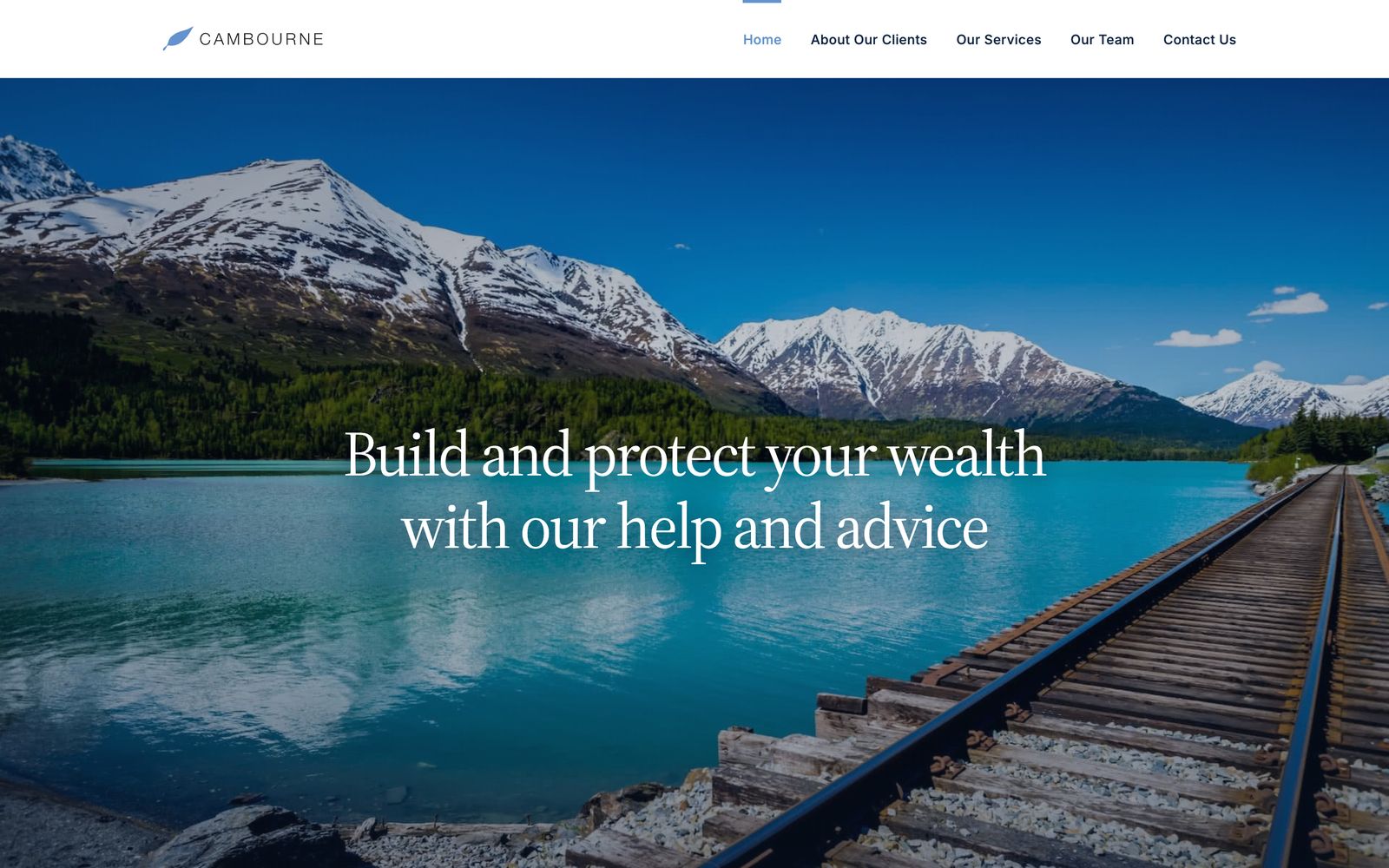
The Cambourne website at the top of this page is a good one. Cambourne is a Midlands financial services firm advising private and corporate clients. We rebuilt its site in September 2026 and now host it, and the menu has five items: Home, About Our Clients, Our Services, Our Team and Contact Us.
What is a brochure website for?
Its job is to support the way people already find and check you. For most service businesses, charities and public bodies, the website is not where the decision is made. People hear about you from a colleague, a friend or a search, look you up, and decide whether you are credible enough to contact.
A business buyer does this before putting you on a shortlist. A household does it before booking a home visit. A funder or a partner does it before agreeing to a first meeting. The brochure website has to pass that test.
Who is a brochure website right for?
A brochure website suits organisations that:
- Sell services, or products that people want to see, talk through or have fitted before they buy.
- Win most of their work through referrals, relationships or conversations.
- Have an offer that does not change every month.
- Need to look credible and be easy to contact, more than they need complex features.
That covers a wide range: professional firms and consultancies, manufacturers, trades and local services, restaurants and venues, charities and many public bodies.
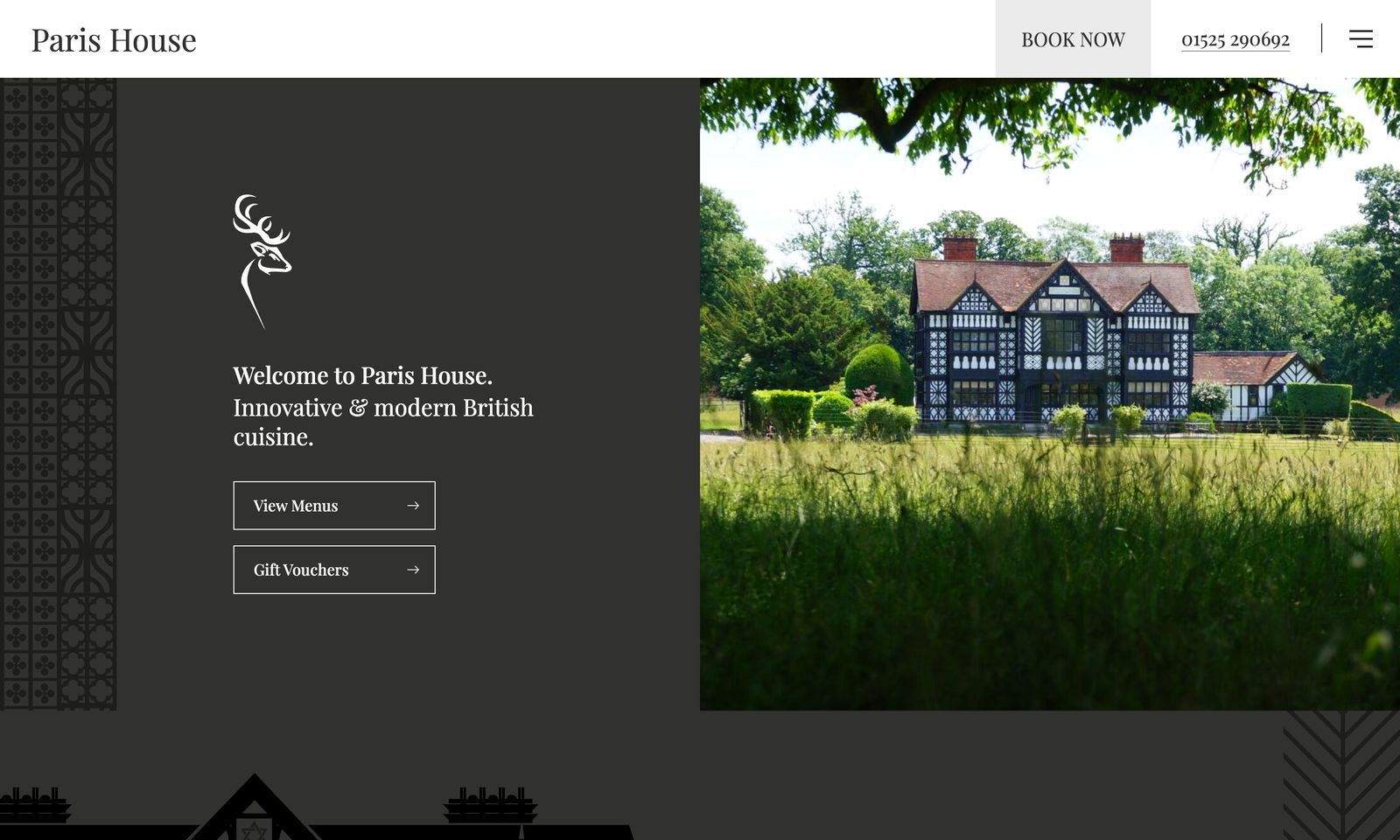
For Paris House, a restaurant in Bedfordshire, we refreshed the brand and designed the website. The strength of the site was always going to be the pictures of the food and the setting, so large images and elegant type let them speak for themselves.
When do you need more than a brochure website?
A brochure site can start to hold you back when:
- You want search to bring in new enquiries. That usually needs more pages: one for each service, sector or location, plus guides that answer the questions people search for. A five-page site gives search engines very little to show. The site we rebuilt for Sayfa Systems, a supplier of safety products for working at height, added a Safety Zone of industry insight, legislation updates and product case studies, plus landing pages for campaigns.
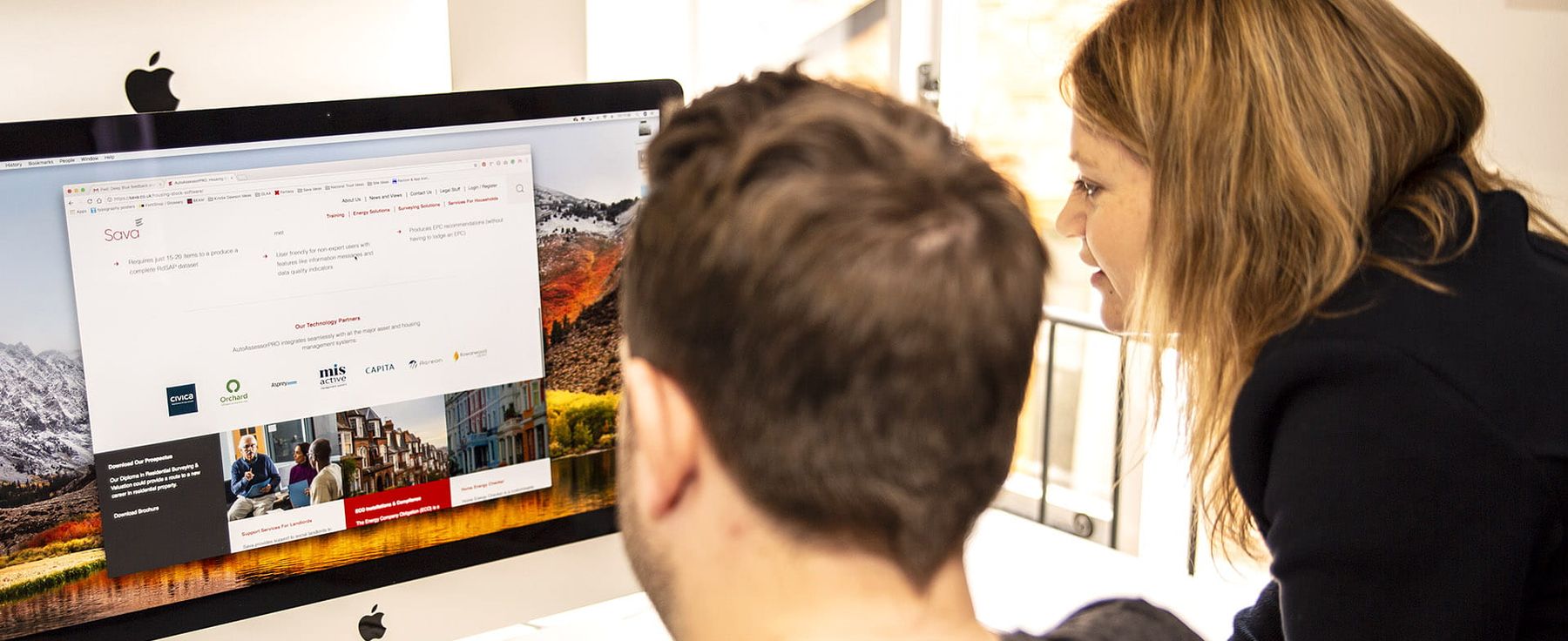
- Your offer is complex. If people need to understand several services, sectors or decision-makers, a few pages may not be enough. National Energy Services, now Sava, had several brands and several websites. The answer was one name and one site that explained the offer clearly to each audience, with film for the more complicated parts.
- You need the site to do things. Bookings, payments, client logins, search tools or connections to your CRM all go beyond a brochure site.
- Your team wants to publish regularly. New case studies, articles and landing pages need a site built to grow, with a design system that lets people add pages without breaking the layout.
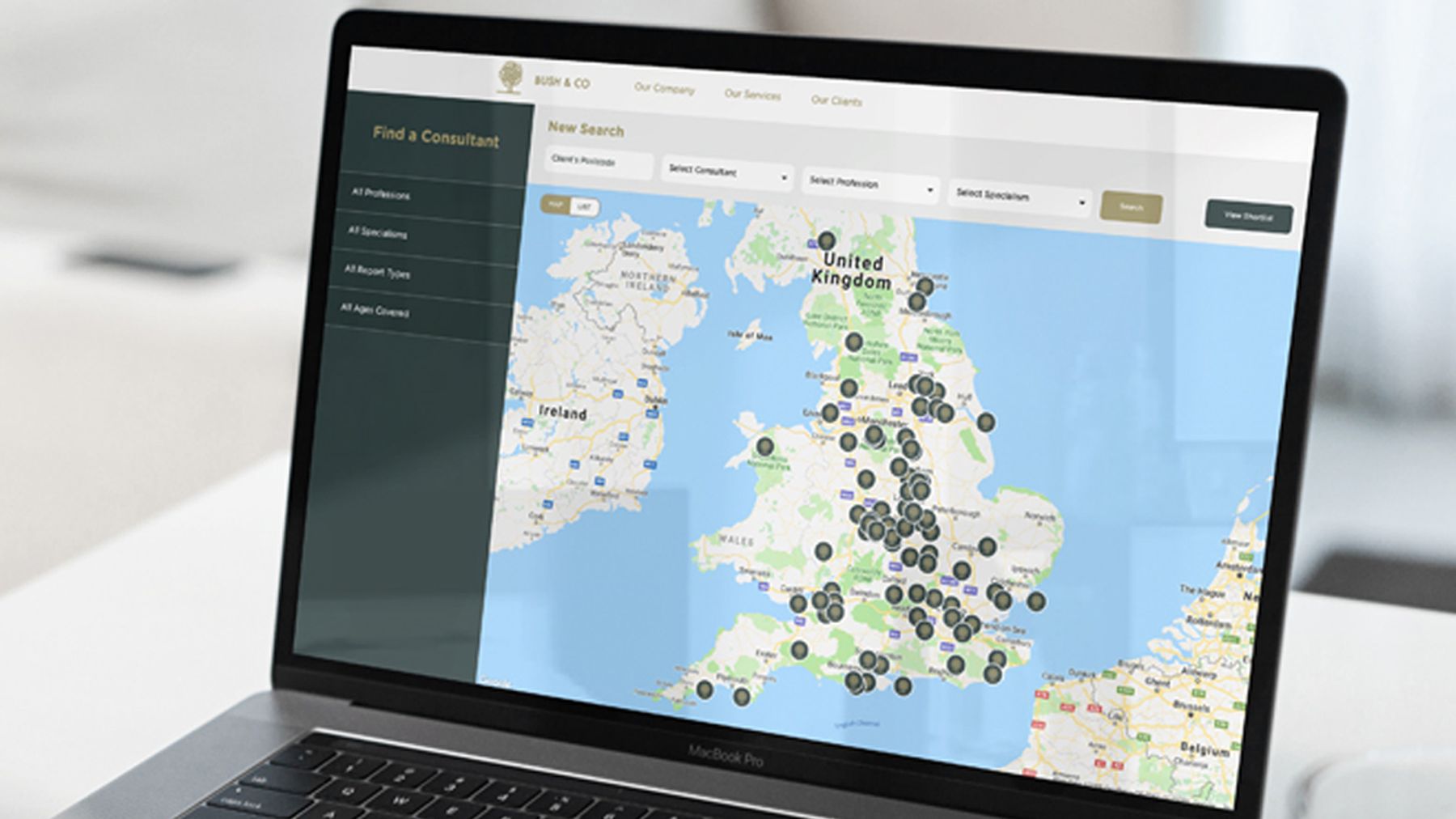
Sometimes you only find out you need more by asking. When we interviewed the solicitors and insurers who choose Bush & Co, one theme kept coming back: solicitors searched for an expert by geography first. That changed what the website had to do. Alongside the new brand, we built a consultant finder on a visual map, where solicitors filter by specialism, geography and experience.
Here is how the three broad kinds of website compare.
| Brochure website | Content-led website | Website with tools | |
|---|---|---|---|
| Main job | Pass the credibility check and earn the enquiry | Bring in people who have not heard of you, then earn the enquiry | Let people do something themselves: search, book, pay, log in |
| Typical size | Five to ten pages | Dozens of pages, growing over time | Varies, because the tool is the point |
| Fits when | Most work comes through referrals and conversations | You want search to find you new customers | People need to find, book or manage something without calling you |
| What it asks of you | Clear words and real proof | A steady flow of useful pages | A budget for building and looking after the tool |
If you are replacing an old site
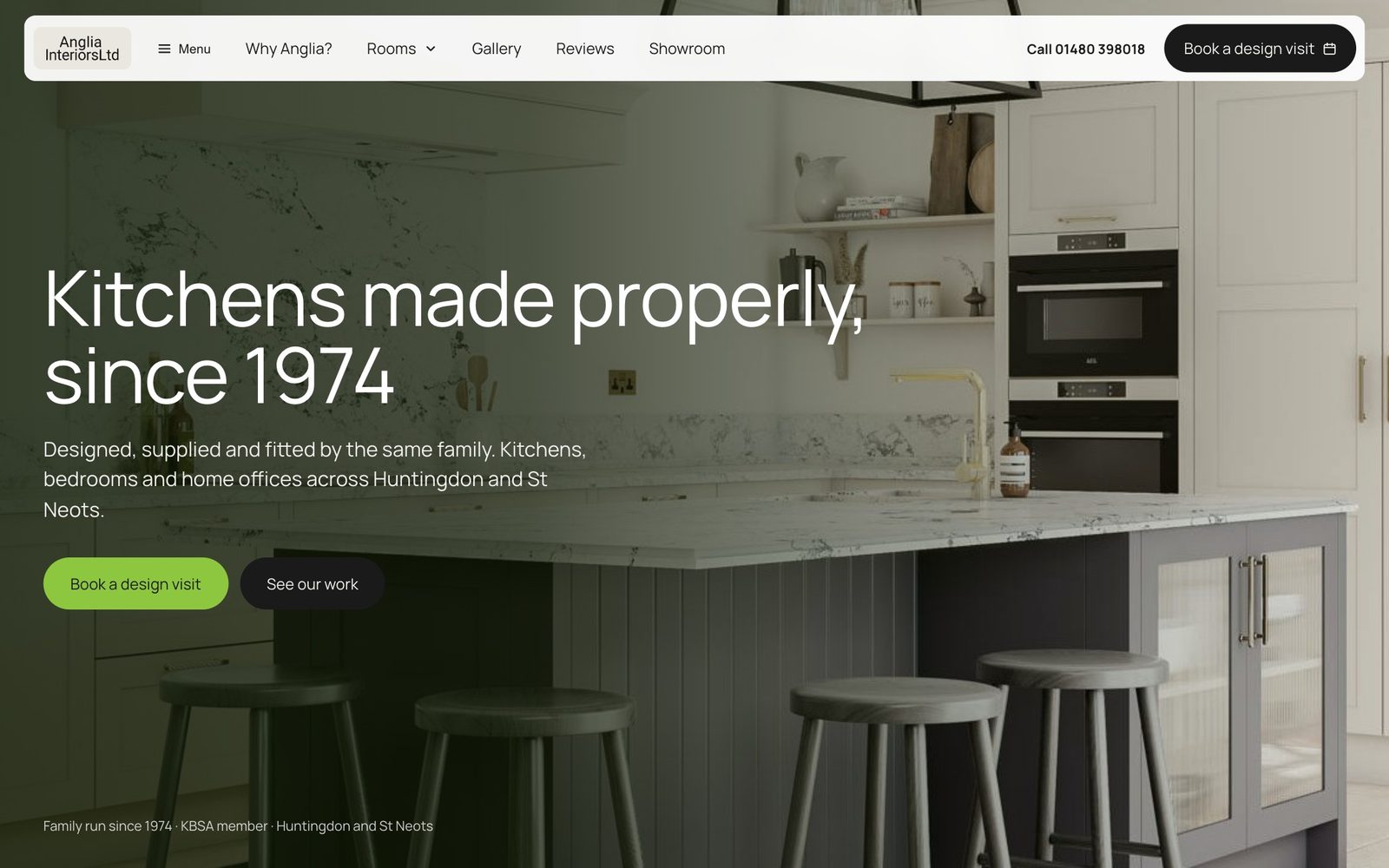
Keep what the old one has earned, whatever its size. Pages that rank, articles people link to and addresses sitting in old emails all carry value, and a careless rebuild can throw it away. When we rebuilt the Anglia Interiors website, nothing they had earned in search was allowed to slip.
- 57articles carried across word for word, each at the address it already hadAnglia Interiors launch-day check, 30 September 2026
- 106addresses from the old site checked on launch day. Every one answeredAnglia Interiors launch-day check, 30 September 2026
- 50%lighter: the new homepage weighed 40KB on launch day against 80KB for the one it replacedAnglia Interiors launch-day check, 30 September 2026
If your site is due a rethink rather than a few fixes, that list of what to keep is where a website redesign should start.
How much does a brochure website cost?
Less than a larger site with features, but the range is still wide. The main factors are how much strategy and content work it needs, how bespoke the design is, and how it will be looked after. We go through each in how much does a website cost in the UK.
The words are the part most often underestimated, especially if you have never had to explain the offer in writing before. If nobody in-house has the time, copywriting help earns its keep, even when the build is simple.
What makes a good brochure website?
Good brochure websites tend to share a few qualities.
A clear headline. Say what you do and who it is for, in the words your customers use. If your offer is hard to explain, settle your brand positioning first.
Proof over claims. Case studies, client logos where you have permission, and named testimonials do more than adjectives. So do your own photographs and films. They show the work, the place and the people, which a stock picture never can. If you have little of your own to show yet, it is worth planning some photography alongside the build.
Fast and easy on a phone. Many people will first see you on a small screen. A light, quick page respects that.
Easy to update. Your team should be able to change words, add a case study or post a news item without calling a developer. A site that has not changed in years tells visitors something about the organisation, too.
Found in search for your name and your main service. Basic search engine optimisation, a Google Business Profile, and accurate page titles and descriptions are part of the job. On the Anglia site, every page gained a description for search results, where the old site had none, and the homepage now gives Google the business's name, address, phone number and opening hours in a form it can read.
Built for one action. Usually a call, an enquiry or a booked meeting. Everything on the site should point to it. On the Anglia Interiors site, every page leads to the same next step: a design visit.
Where to start
You do not need a fifty-page brief. You need a few decisions, made in the right order.
- 01Write two lines
The one thing you want a visitor to understand, and the one thing you want them to do. If those are clear, the rest follows.
- 02Talk to the people who choose you
Ask a handful of customers, clients or supporters how they found you, what they checked, and what nearly stopped them getting in touch.
- 03Plan pages from their questions
Each page should answer something people actually ask. If nobody asks it, it probably does not need a page.
- 04Gather the proof
Case studies, testimonials you have permission to use, and photographs of your own people and work.
- 05Write the words before the design
The words decide what each page has to hold, so the design fits them, not the other way round.
- 06Plan for growth
Even with five pages, build on something that lets you add services, case studies and articles later without starting again.
The second step is the one most often skipped, and the one that changes the most. It is the heart of human-centred design: the site follows what people actually do and ask, not what an organisation assumes.
I’ll be honest, plenty of agencies promise they’ll get to know your business. Ideate actually did it. They started with our customers rather than our logo, and the behavioural research they came back with told us things about how all our various customer groups choose a provider that we genuinely hadn’t seen before.
If you are planning one, small business website design covers what to ask whoever builds it, and the work page shows more of the websites we have made. If you already have a small site and are not sure it is pulling its weight, our free marketing audit looks at your website and marketing and comes back with three things you could fix this month.
Common questions
How many pages does a brochure website have?
Usually between five and ten. The right number is however many it takes to explain the offer clearly, and no more.
Is a brochure website the same as a digital brochure?
No. A digital brochure is a single document, often a PDF, that people download or page through on screen. A brochure website is a small set of web pages that people can find in search, move around and contact you through.
Is a brochure website good for SEO?
It can rank for your name and a few core terms. To win new enquiries from search, most organisations need more pages answering specific services, sectors, places and questions.
Can I update a brochure website myself?
You should be able to. Most run on a content management system such as WordPress, so words, images and posts can be changed without a developer.
How long does a brochure website take to build?
How ready the words and pictures are matters more than how many pages there are. A site more often waits on its content than on its design or build, so the words are worth settling first.
Does a brochure website need looking after?
Yes, like any website, in two ways. The software underneath needs updates and backups, and someone should check that people can still find and use the site. Agree who does each before it goes live. Our website care is the second kind: six checks every week, with small fixes that can be undone made and logged.
Is a one-page website a brochure website?
It is the smallest kind. Everything sits on one scrolling page, which can work for a very simple offer or a single event, but it gives search engines even less to show.
Can a brochure website take bookings or sell online?
Not by itself. Selling online needs a catalogue, a basket and payments, and bookings or logins need tools built for the job. Many small sites simply link to a booking or payment service run by someone else, which keeps the site itself simple.